

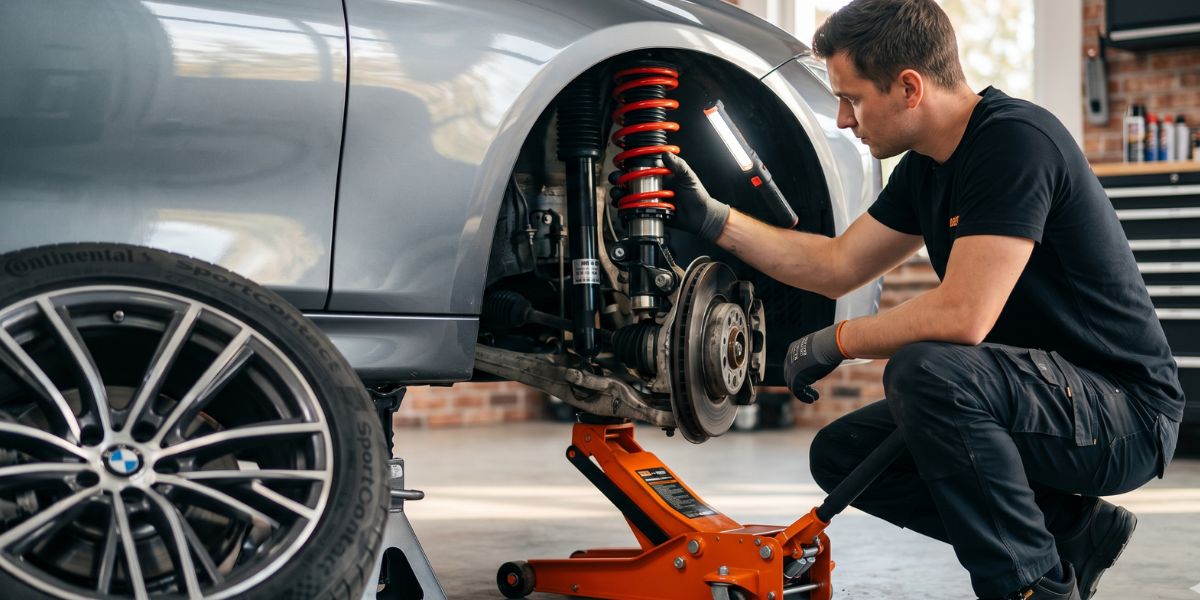
Your car suspension system does more than make the ride comfortable. It helps keep your tires on the road. It supports safe steering. It also helps your car stay stable when you brake, turn, or drive over rough roads.
Many drivers do not think about suspension until something feels wrong. Maybe the car starts bouncing too much. Maybe you hear a clunking sound over bumps. Maybe the steering feels loose. These signs may look small at first, but they can turn into bigger repair costs if you ignore them.
Learning how to check car suspension system at home can help you notice problems early. You do not need to be a professional mechanic to spot basic warning signs. A simple inspection can tell you when something is not right.
This guide will explain the easiest ways to check your car suspension system. You will learn what to look for, what sounds to notice, and when it is time to visit a mechanic.
What Does a Car Suspension System Do?
The suspension system connects your car body to the wheels. It helps control how the car moves on the road. When you drive over bumps, potholes, or uneven roads, the suspension absorbs much of the impact.
A good suspension system keeps your ride smooth. It also keeps the tires touching the road properly. This is very important for braking, steering, and cornering.
The main parts of a suspension system include:
- Shocks
- Struts
- Springs
- Control arms
- Ball joints
- Bushings
- Sway bar links
Each part has a job. Springs support the weight of the car. Shocks and struts control movement and bouncing. Bushings reduce vibration. Ball joints and control arms help the wheels move correctly.
When one part wears out, the whole driving experience can change. The car may feel rough, noisy, loose, or unsafe.
Common Signs of a Bad Suspension System
A bad suspension system usually gives warning signs. You may notice one problem first, then more signs over time.
One common sign is excessive bouncing. If your car keeps bouncing after hitting a bump, the shocks or struts may be worn. A healthy suspension should settle quickly.
Another sign is uneven tire wear. If one tire wears faster than the others, the suspension or alignment may be the reason.
You may also hear strange noises. Clunking, knocking, squeaking, or rattling sounds can come from worn suspension parts. These sounds are often louder when driving over bumps or rough roads.
Other signs include:
- Car pulls to one side
- Steering feels loose
- Car nose dives when braking
- One side of the car sits lower
- Ride feels rough
- Car feels unstable at higher speed
- Tires show cupping or bald patches
These symptoms should not be ignored. Suspension problems can affect safety, not just comfort.
How to Check Car Suspension System at Home
Before you start, park your car on a flat surface. Turn off the where are brakes on a car engine. Engage the parking brake. Make sure the car is stable.
Start with a simple walkaround inspection. Look at the car from the front, back, and both sides. Check if the vehicle sits evenly. If one corner looks lower than the others, there may be a problem with the spring, strut, or another suspension part.
Next, look near the wheels. You may not see every suspension component clearly, but you can still notice signs of damage. Look for broken parts, leaking fluid, cracked rubber, or anything hanging loose.
Also check the tires. Tires can tell you a lot about suspension health. Uneven wear, cupping, or bald spots may point to a suspension or alignment issue.
This basic inspection is a good first step. It helps you decide whether your car needs a closer check by a mechanic.
Do the Bounce Test
The bounce test is one of the easiest ways to check shocks or struts.
Go to one corner of the car. Push down firmly on the body of the vehicle. Then release it. Watch how the car moves.
A healthy suspension should bounce once and settle. If the car keeps bouncing up and down, the shock or strut may be worn.
Repeat this test on all four corners. Front and rear suspension parts can wear differently, so check each side.
This test is not perfect, but it is useful. If your car feels soft, floaty, or keeps bouncing after bumps, the suspension needs attention.
Inspect the Tires for Uneven Wear
Tires are one of the best places to find suspension clues. A worn suspension can cause tires to lose proper contact with the road. This can create uneven wear.
Look at each tire carefully. Check the inside edge, outside edge, and middle of the tread.
Watch for:
- Uneven tread depth
- Cupping marks
- Bald patches
- Feathered edges
- One tire wearing faster than the others
Cupping looks like small dips or uneven patches across the tire tread. This often happens when the tire bounces too much on the road.
Uneven tire wear can also come from poor wheel alignment, low tire pressure, or worn steering parts. But suspension issues are a common cause.
If your tires keep wearing unevenly even after rotation or alignment, you should have the suspension checked.
Listen for Suspension Noises While Driving
Your ears can help you detect suspension problems. Many worn suspension parts make noise before they fail completely.
Drive slowly over a quiet road with small bumps. Listen carefully.
A clunking sound may mean a worn ball joint, control arm, sway bar link, or bushing. A squeaking sound may come from dry or cracked rubber parts. A rattling sound may point to loose suspension hardware.
Pay attention to when the sound happens. Does it happen only over bumps? Does it happen when turning? Does it happen when braking?
This information can help a mechanic find the problem faster.
Never ignore loud knocking sounds. They may mean a suspension part is badly worn or loose. That can affect steering and safety.
Check for Fluid Leaks Around Shocks or Struts
Shocks and struts often contain fluid. This fluid helps control movement. If the shock or strut leaks, it may not work properly.
Look behind each wheel if you can. Check the shock or strut body for wet, oily marks. A light film of dirt may be normal, but clear oil leakage is not a good sign.
Leaking shocks or struts can make the ride bouncy. They can also increase braking distance and reduce control on rough roads.
If you see oil leaking from a shock or strut, it usually needs replacement. In many cases, mechanics recommend replacing shocks or struts in pairs on the same axle. This keeps the car balanced.
Check Steering Feel and Vehicle Stability
Suspension and steering work closely together. When suspension parts wear out, steering can feel different.
While driving, notice how the steering wheel feels. A good steering system should feel steady and controlled.
Warning signs include:
- Steering feels loose
- Car wanders on the road
- Steering feels delayed
- Car pulls left or right
- Steering wheel shakes
- Car feels unstable during turns
Some of these problems can also come from tire or alignment issues. But worn suspension parts are often connected.
If your car feels hard to control, do not wait. Steering and suspension problems can become dangerous, especially at higher speeds.
Look Under the Car for Damaged Parts
A visual check under the car can show more signs. But safety is very important.
Never go under a car that is supported only by a jack. Use proper jack stands if you know how to work safely. If you are not comfortable, let a mechanic inspect it.
From a safe position, look for damaged or worn parts. Rubber bushings should not be badly cracked or missing. Springs should not be broken. Control arms should not look bent. Sway bar links should not be loose or damaged.
Rust can also weaken suspension parts. A little surface rust may not be serious, but heavy rust around suspension mounting points should be checked by a professional.
If you recently hit a pothole, curb, or road debris, inspect the suspension soon after. A hard impact can bend or loosen parts.
Check the Car Height
Vehicle height can reveal suspension trouble. Park your car on level ground. Step back and look at the car from all sides.
Does one corner sit lower? Does the front look too low? Does the rear sag?
A sagging car may have a weak spring, damaged strut, or overloaded suspension. Sometimes the issue is easy to see. Other times it may need measurement.
A lower side can affect alignment and tire wear. It can also change braking and cornering performance.
If your vehicle looks uneven, schedule an inspection. This is not something to ignore.
Notice How the Car Brakes
Bad suspension can affect braking. When you press the brake pedal, the car should slow down smoothly and stay stable.
If the front of the car dives hard when braking, the front shocks or struts may be worn. Some nose dive is normal, but too much movement is a warning sign.
A weak suspension can also make the car feel unstable during sudden stops. The tires may not stay firmly planted on the road. This can reduce control.
If your car pulls to one side while braking, there may be a suspension, brake, tire, or alignment problem. Get it checked soon.
Test the Ride Comfort
A rough ride is another sign of suspension wear. Your car should absorb normal road bumps without feeling harsh or uncontrolled.
If every small bump feels strong inside the cabin, the suspension may not be working well. If the car feels like it floats or rolls too much, shocks or struts may be weak.
Pay attention to changes. If your car used to feel smooth but now feels rough, something may have changed in the suspension.
Ride comfort is not only about luxury. It is also connected to control and tire contact.
When Should You Visit a Mechanic?
A home inspection can help you find warning signs. But some problems need a trained mechanic.
Visit a mechanic if:
- You hear loud clunking or knocking
- Steering feels loose or unsafe
- The car pulls to one side
- One side of the car sits lower
- Shocks or struts are leaking
- Tires wear unevenly
- The car bounces too much
- The vehicle feels unstable at highway speed
A mechanic can lift the car safely and check parts more closely. They can test ball joints, bushings, control arms, shocks, struts, and alignment.
It is better to check early than wait until a part fails. Suspension failure can lead to tire damage, poor handling, and unsafe driving.
How Much Does Suspension Repair Cost?
Suspension repair cost depends on the problem. A simple bushing or sway bar link may cost less than replacing struts or control arms.
The vehicle model also matters. Luxury cars, trucks, and SUVs may cost more to repair. Labor costs also vary by location.
Common suspension repairs include:
- Shock replacement
- Strut replacement
- Ball joint replacement
- Control arm replacement
- Spring replacement
- Bushing replacement
- Sway bar link replacement
- Wheel alignment
Even if the repair cost feels high, delaying the work can cost more. Bad suspension can damage tires, affect alignment, and put stress on other parts.
A good repair shop should explain what is worn, why it matters, and what should be fixed first.
Can You Drive With Bad Suspension?
It depends on how bad the problem is. A slightly worn shock may not stop the car from driving. But it can still affect ride quality and tire wear.
A serious suspension problem is different. If a ball joint, control arm, or spring is badly damaged, driving can be unsafe.
You should avoid driving if:
- The car feels hard to control
- A wheel area makes loud knocking sounds
- The car sits very low on one side
- Steering feels loose
- A suspension part looks broken
- The tire is rubbing against the body
When in doubt, do not take risks. Have the car inspected before driving far.
Tips to Keep Your Suspension System Healthy
You can help your suspension last longer with simple habits.
Avoid hitting potholes at high speed. Slow down when roads are rough. Hard impacts can damage shocks, struts, wheels, tires, and alignment.
Keep your tires properly inflated. Low or high tire pressure can affect ride comfort and tire wear.
Do not overload your vehicle. Too much weight puts extra stress on springs and shocks.
Get wheel alignment checked when needed. Poor alignment can make suspension parts and tires wear faster.
Also, inspect your car after a hard impact. If you hit a curb or deep pothole, check for noises, pulling, or steering changes.
Regular maintenance is always cheaper than major repair.
Final Thoughts
Knowing how to check car suspension system can help you protect your car and your safety. You do not need special tools to notice many early warning signs. You only need to pay attention to how your car looks, feels, sounds, and drives.
Check for bouncing, uneven tire wear, strange noises, leaks, pulling, and poor steering control. These signs can tell you when something is wrong.
A good suspension system keeps your car stable, smooth, and safe. If you notice a problem, do not ignore it. A quick inspection today can save you from expensive repairs later.
FAQs
How do I know if my car suspension is bad?
You may notice bouncing, clunking sounds, uneven tire wear, poor steering, or the car pulling to one side. A rough ride can also be a warning sign.
Can I check my car suspension at home?
Yes. You can do a basic check at home. Look at tire wear, vehicle height, fluid leaks, and strange noises. You can also do the bounce test.
What does a bad suspension sound like?
A bad suspension may make clunking, knocking, squeaking, or rattling sounds. These sounds often happen when driving over bumps.
Is it safe to drive with suspension problems?
Small issues may not feel serious at first, but suspension problems can affect steering, braking, and stability. If the car feels unsafe, get it checked right away.
What is the easiest way to check shocks or struts?
The bounce test is the easiest method. Push down on each corner of the car and release. If it keeps bouncing, the shocks or struts may be worn.
Can bad suspension damage tires?
Yes. Bad suspension can cause uneven tire wear, cupping, and faster tire damage. It can also affect wheel alignment.
Should shocks or struts be replaced in pairs?
In most cases, yes. Replacing them in pairs on the same axle helps keep the car balanced and stable.
How often should I check my suspension system?
Check it during regular maintenance, before long trips, after hitting a pothole, or whenever you notice noise, bouncing, pulling, or uneven tire wear.
