
Measuring shaft length on an outboard motor sounds how to measure shaft length outboard motor simple, but it is one of the most important checks you can do before buying, selling, or installing a motor. A wrong measurement can lead to poor boat performance, wasted fuel, propeller ventilation, overheating, and expensive repairs.
The good news is that you do not need special tools or advanced boating knowledge. You only need to know the two correct points to measure from. Once you know those points, the process becomes quick, clear, and easy to repeat.
In this guide, you will learn what shaft length really means, where to measure, how to avoid common mistakes, and how to match the motor to your boat’s transom height.
Why Shaft Length Matters
The shaft length controls how deep the lower unit and propeller sit in the water. That depth affects almost everything about how your boat runs.
When the motor sits at the right height, the propeller gets clean water. The boat moves smoothly, the motor cools properly, and fuel use stays reasonable. When the motor sits too high, the propeller may suck in air from the surface. This is often called ventilation. The engine may rev loudly, but the boat will not move with strong power.
When the motor sits too low, another problem appears. The lower unit creates extra drag in the water. That drag slows the boat down, makes the motor work harder, and increases fuel use. Over time, it can also place extra strain on the engine and mounting system.
This is why experienced boat owners and marine technicians check shaft length before worrying about many other motor specs. Horsepower matters, but shaft length decides whether that horsepower reaches the water properly.
A two-minute measurement can help prevent a very expensive mistake.
What Shaft Length Actually Means
Many people think shaft length means the full height of the outboard motor. That is not correct.
Shaft length does not mean the distance from the how to measure shaft length outboard motor top of the engine cover to the bottom of the propeller. It also does not mean the full height of the lower unit. Shaft length is a specific measurement used by outboard manufacturers and boat riggers.
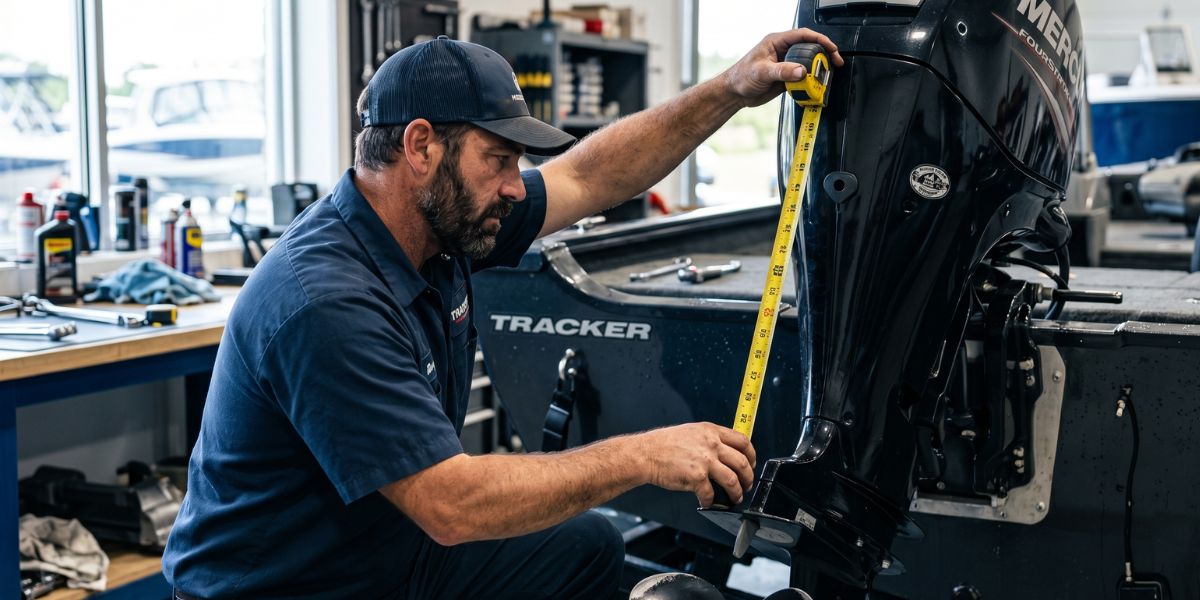
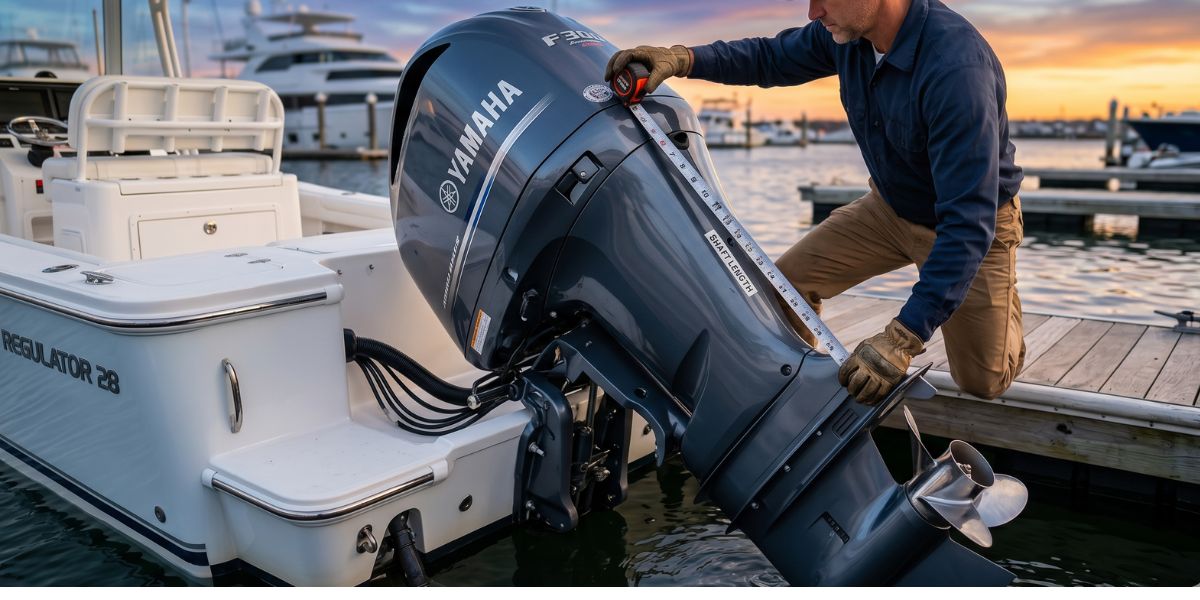
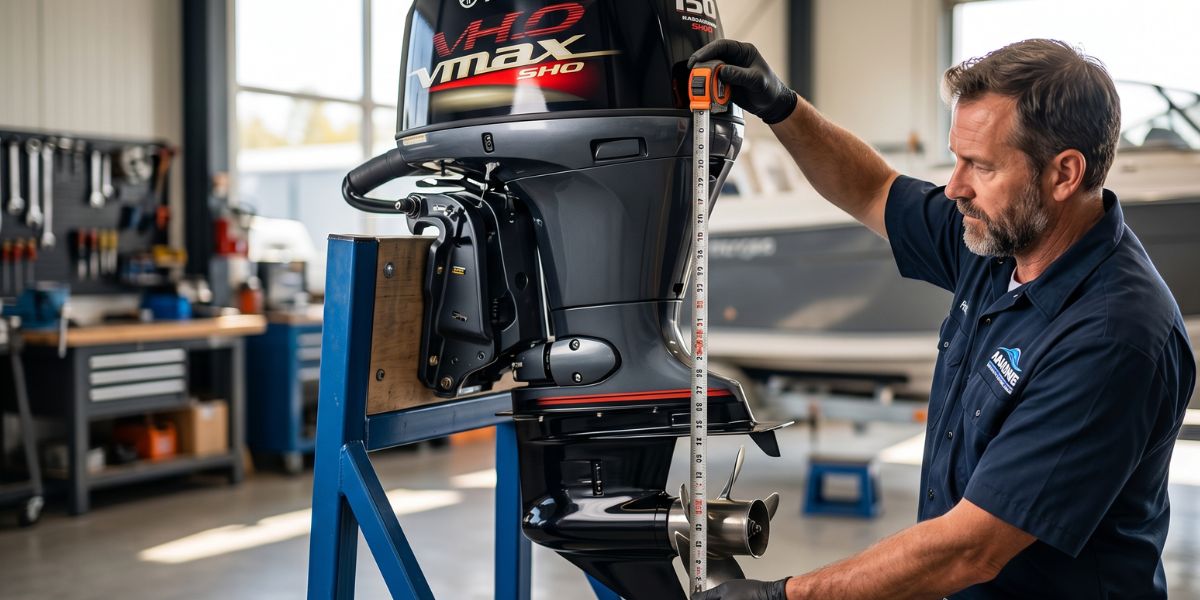
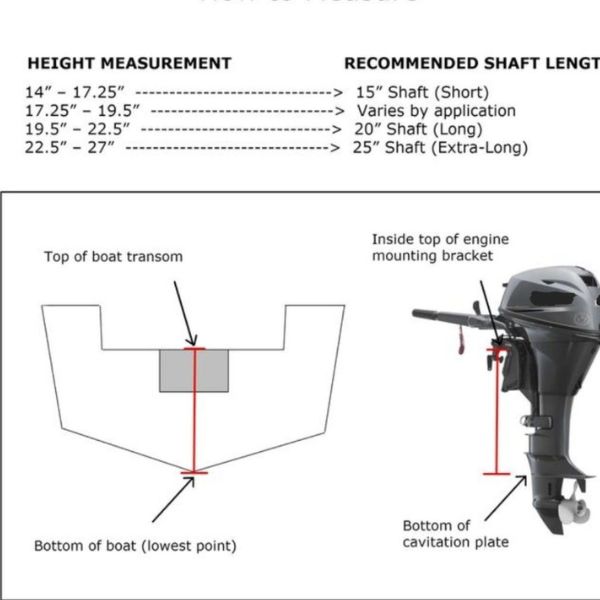
On most outboard motors, shaft length is measured from the top of the clamp bracket down to the top surface of the anti-ventilation plate, often called the cavitation plate.
The clamp bracket is the part that attaches the motor to How to Measure an Outboard Motor Shaft Length the boat’s transom. The anti-ventilation plate is the flat horizontal plate above the propeller. These two points matter because they show how the motor will sit on the boat and how deep the propeller will run in the water.
This is also why two motors with the same horsepower can have different shaft lengths. A 25 hp motor may come in a short shaft, long shaft, or extra-long shaft version, depending on the model and purpose.
The Two Reference Points You Must Use
To get the right measurement, you need to use the correct starting point and ending point. Using the wrong points will give you a number that looks useful but is actually misleading.
1. Top of the Clamp Bracket
The first point is the top edge of the clamp bracket. This is the bracket that hooks over or bolts to the transom of the boat.
Do not start from the engine cowling. The cowling is the cover over the engine. It is much higher than the mounting point and will add several inches to your measurement.
Look at where the motor would rest on the boat’s transom. The highest part of that mounting bracket is your starting point.
On older motors, this area may be dirty, painted, corroded, or worn. Clean it if needed. Make sure you are measuring from the actual top edge of the bracket, not from a rounded cover or nearby raised part.
2. Top of the Cavitation Plate
The second point is the top surface of the cavitation how to measure shaft length outboard motor plate, also called the anti-ventilation plate. This is the wide, flat plate just above the propeller.
Do not measure to the propeller tip. Do not measure to the bottom of the skeg. Do not measure to the bottom of the lower unit. Those points are too low and will give you the wrong result.
Your tape measure should stop at the top surface of the cavitation plate.
This plate is easy to find on most motors. Stand behind the motor and look just above the propeller. You will see a flat fin that extends outward on both sides. That is the correct ending point.
Tools You Need
You do not need many tools to measure shaft length. Most people can do it with items they already have.
You will need:
A rigid tape measure. A steel tape measure works best because it stays straight and gives a cleaner reading.
A straight edge or level can help if you want to confirm that the motor is vertical.
A phone or notepad is useful for writing down the measurement right away.
A second person can help hold the tape, but it is not always necessary.
A camera is helpful if you are buying or selling a used motor. A photo of the tape in place can prevent confusion later.
Try not to use a soft sewing tape or a flexible cloth tape. These can bend around the motor and add error. You want a straight vertical measurement, not a curved one.
How to Measure Shaft Length Step by Step
Follow these steps carefully. The method is simple, but accuracy matters.
Step 1: Place the Motor in a Vertical Position
The motor must be straight up and down. If it is tilted how to winterize outboard motor forward or backward, your measurement becomes diagonal. A diagonal measurement will be longer than the true shaft length.
If the motor is on the boat, trim it down until it is vertical. If the motor is off the boat, place it safely on a stand or stable surface.
Step 2: Find the Top of the Clamp Bracket
Look for the part of the motor that sits on or bolts to the transom. Find the highest edge of that bracket. This is your starting point.
Take a moment to confirm this point. Many wrong measurements happen because people start too high on the engine body.
Step 3: Place the Tape at the Starting Point
Put the end of your tape measure on the top edge of the clamp bracket. Hold it firmly so it does not slide.
If you are working alone, you may be able to hook the tape over the edge. If not, ask someone to hold it for you.
Step 4: Run the Tape Straight Down
Pull the tape straight down toward the cavitation plate. Keep it vertical. Do not follow the shape of the motor body.
This step is important. The motor body may angle slightly, but your measurement should not. Shaft length is a straight vertical measurement.
Step 5: Stop at the Top of the Cavitation Plate
Bring the tape down to the top surface of the cavitation plate. Read the number at that point.
Do not keep measuring down to the propeller or skeg. That will not tell you shaft length.
Step 6: Record the Exact Number
Write down the exact measurement before rounding. For example, if you see 20.25 inches, write that down. Do not immediately call it 20 or 21 inches.
Standard shaft sizes are usually spaced in five-inch steps, so even a small measuring mistake can lead to the wrong choice.
Step 7: Take a Photo
Take a clear photo showing the tape at both reference points. This is especially useful for used motor sales. It gives you proof of the measurement and helps avoid later disputes.
Step 8: Measure Again
Repeat the process one more time. A second measurement helps catch small mistakes. If both readings are close, you can trust the result.
Standard Outboard Shaft Lengths
Most outboard motors fall into four common shaft length categories.
Short Shaft: 15 Inches
A short shaft motor is usually used on small boats with low transoms. You may see it on small aluminum boats, canoes, dinghies, and some flat-bottom skiffs.
This size is best for boats with transom heights around 15 inches.
Short shaft motors are helpful in shallow water because the lower unit does not sit too deep. But they are not right for taller transoms. On a tall transom, a short shaft motor may sit too high, causing the propeller to pull in air.
Long Shaft: 20 Inches
The long shaft is one of the most common sizes for recreational boats. It is often used on fishing boats, bass boats, center consoles, and family boats.
This size usually fits transom heights from about 17 to 20 inches.
Many buyers choose a long shaft because it feels like the safe middle option. But you should still measure. A long shaft is common, but it is not correct for every boat.
Extra-Long Shaft: 25 Inches
An extra-long shaft is often used on boats with higher transoms. This can include offshore boats, pontoons, some deep V-hulls, and boats with special mounting setups.
This size usually works with transom heights around 21 to 25 inches.
Pontoon boats often need a long or extra-long shaft because of the way the motor pod and deck are positioned. Still, never guess based only on boat type. Measure the actual setup.
Ultra-Long Shaft: 30 Inches
Ultra-long shaft motors are less common. They are used for special applications such as deep transoms, high-sided boats, sailboat brackets, and some commercial rigs.
This size is usually matched with transom heights around 26 to 30 inches.
You should not choose an ultra-long shaft unless your boat clearly needs it. Too much shaft length can create extra drag and reduce performance.
How to Measure Transom Height
Measuring the motor is only half of the job. You also need to measure the boat’s transom height.
The transom is the back part of the boat where the motor mounts. To measure it, start at the top center of the transom where the motor sits. Measure straight down to the bottom of the hull.
For many boats, this gives you the number you need to match with shaft length.
On a V-hull boat, measure down to the lowest point at the centerline of the hull. On a flat-bottom boat, measure straight down to the flat bottom. The goal is to understand where the hull bottom sits in relation to the motor.
Once mounted, the cavitation plate should usually sit about one to two inches below the bottom of the hull. This position helps the propeller stay in clean water without placing the lower unit too deep.
Matching Shaft Length to Transom Height
Here is a simple matching guide:
| Around 15 inches | Short shaft, 15 inches | Small boats, dinghies, low transoms |
| Around 17–20 inches | Long shaft, 20 inches | Fishing boats, family boats |
| Around 21–25 inches | Extra-long shaft, 25 inches | Pontoons, offshore hulls |
| Around 26–30 inches | Ultra-long shaft, 30 inches | Deep transoms, special rigs |
This chart is a starting point. You should also check the manufacturer’s rigging guide for your motor and boat type.
If your measurement falls between two sizes, do not guess too quickly. Remeasure first. Then look at the boat design, motor mounting height, and any added brackets.
In some cases, a jack plate or setback bracket changes the ideal shaft length.
Special Cases That Can Change the Measurement
Not every boat uses a simple transom setup. Some boats have parts that change how the motor sits in the water.
Jack Plates
A jack plate moves the motor back and often raises it. This can change the shaft length you need. When using a jack plate, measure from the motor mounting surface of the jack plate, not just the original transom top.
Setback Brackets
A setback bracket moves the motor farther behind the boat. Because the water flow changes behind the hull, the motor may need a different height than a standard setup.
Pontoon Boats
Pontoon boats can vary a lot. Some use long shafts, while others need extra-long shafts. Always measure the motor pod or transom area where the motor actually mounts.
Sailboats
Many sailboats use outboard brackets. These brackets may place the motor lower or farther back than a normal transom. For sailboats, bracket position matters as much as the motor shaft length.
Older Boats
Older boats may not match modern standard transom sizes. Repairs, modifications, and homemade brackets can also change the setup. Measure carefully and do not rely only on the boat model name.
Measuring a Used Outboard Motor
Used motors are often listed with the wrong shaft length. Sometimes the seller guesses. Sometimes they copy a label without checking. Sometimes they measure from the wrong point.
Before buying a used outboard, always ask for a real measurement from the top of the clamp bracket to the top of the cavitation plate.
A good seller should be willing to provide a photo with the tape measure in place.
Also inspect the lower unit. Heavy wear, corrosion, or damage around the cavitation plate may make measuring harder. In that case, use the cleanest visible top surface of the plate and check the factory specification if possible.
Watch for signs that the motor may have been used at the wrong depth. These can include unusual cavitation plate wear, propeller damage, overheating history, or complaints about poor acceleration.
A used motor can still be a great buy, but only when you confirm that it fits your boat.
Common Measuring Mistakes
Many shaft length problems come from simple measuring errors. Here are the biggest mistakes to avoid.
Measuring From the Engine Cowling
This is the most common mistake. The cowling is not the starting point. Starting there adds extra inches and gives a useless number.
Measuring to the Propeller
The propeller is not the ending point. Shaft length ends at the top of the cavitation plate.
Measuring to the Skeg
The skeg is the lowest fin below the propeller. Measuring to the skeg makes the motor seem much longer than it is.
Following the Shape of the Motor
Do not bend the tape along the motor body. Run it straight down.
Measuring With the Motor Tilted
A tilted motor gives a diagonal measurement. Always trim the motor until it is vertical.
Trusting a Listing Without Proof
A seller may say the motor is long shaft, but you should still verify it. A photo with a tape measure is better than a guess.
Ignoring the Boat Transom
Even a correctly measured motor may be wrong for your boat if you do not measure the transom.
What Happens When Shaft Length Is Wrong?
A motor that is too short often causes ventilation. The engine may rev high, but the boat may struggle to accelerate. The propeller may lose grip in turns or in choppy water. Cooling water intake can also become less reliable because the intake may sit too close to the surface.
A motor that is too long creates drag. The boat may feel heavy and slow. Fuel use may rise. Steering may feel less responsive. At higher speeds, the extra drag can reduce performance and make the motor work harder than needed.
Correct shaft length helps the motor run in its best range. It gives the propeller clean water, supports proper cooling, and helps the boat handle as designed.
Expert Tips for Better Accuracy
Measure twice before making a decision.
Take photos from the side and back of the motor.
Write down the exact number before rounding.
Compare the number with standard sizes.
Measure the boat transom separately.
Check the manufacturer’s guide when possible.
Be extra careful with used motors, jack plates, pontoons, and modified boats.
If the measurement does not make sense, stop and recheck your reference points. Most strange numbers come from measuring from the wrong place.
FAQs
How do you measure shaft length on an outboard motor?
Measure straight down from the top edge of the clamp bracket to the top surface of the cavitation plate above the propeller. Keep the motor vertical and keep the tape straight.
Is shaft length the total height of the motor?
No. Shaft length is not the full motor height. It is the distance from the mounting bracket area to the cavitation plate.
Can I measure shaft length while the motor is on the boat?
Yes. You can measure it while mounted, but the motor must be trimmed into a vertical position. A tilted motor will give a wrong reading.
What are the standard outboard shaft lengths?
The common sizes are 15 inches, 20 inches, 25 inches, and 30 inches. These are usually called short, long, extra-long, and ultra-long.
What shaft length do I need for a 20-inch transom?
A 20-inch transom usually needs a long shaft motor. Still, you should confirm the full setup, especially if your boat has a bracket or jack plate.
What happens if my outboard shaft is too short?
The propeller may pull in air, the engine may rev without strong thrust, and the motor may run hotter because the cooling intake may not stay deep enough in clean water.
What happens if my outboard shaft is too long?
The lower unit may sit too deep, creating extra drag. This can reduce speed, increase fuel use, and make the boat feel less efficient.
Should the cavitation plate be above or below the hull?
In most setups, the cavitation plate should sit about one to two inches below the bottom of the hull when the motor is mounted and trimmed straight.
Final Thoughts
Measuring shaft length on an outboard motor is not difficult, but it must be done correctly. The key is to use the right two points: the top of the clamp bracket and the top of the cavitation plate.
Do not measure from the engine cover. Do not measure to the propeller. Do not measure with the motor tilted.
Once you have the correct shaft length, compare it with your boat’s transom height. A properly matched motor will run smoother, push better, cool better, and use fuel more efficiently.
A few minutes with a tape measure can save you from poor performance, buyer’s regret, and costly repairs.