
You hit a pothole at 40 mph. Your car dips slightly, then recovers almost instantly — and you barely feel it inside the cabin. That seamless recovery is not luck. It is your suspension system doing exactly what it was designed to do.
Most drivers take this for granted. But the moment your suspension starts to fail, you feel everything: every crack in the road, every bump at the intersection, every sharp turn that sends your body sideways. More importantly, a worn suspension is not just uncomfortable — it is genuinely dangerous.
So what exactly is a car suspension system, how does it work, and why should you care? This guide breaks it all down in plain language — no mechanical degree required.
What Is a Car Suspension System? (Simple Definition)
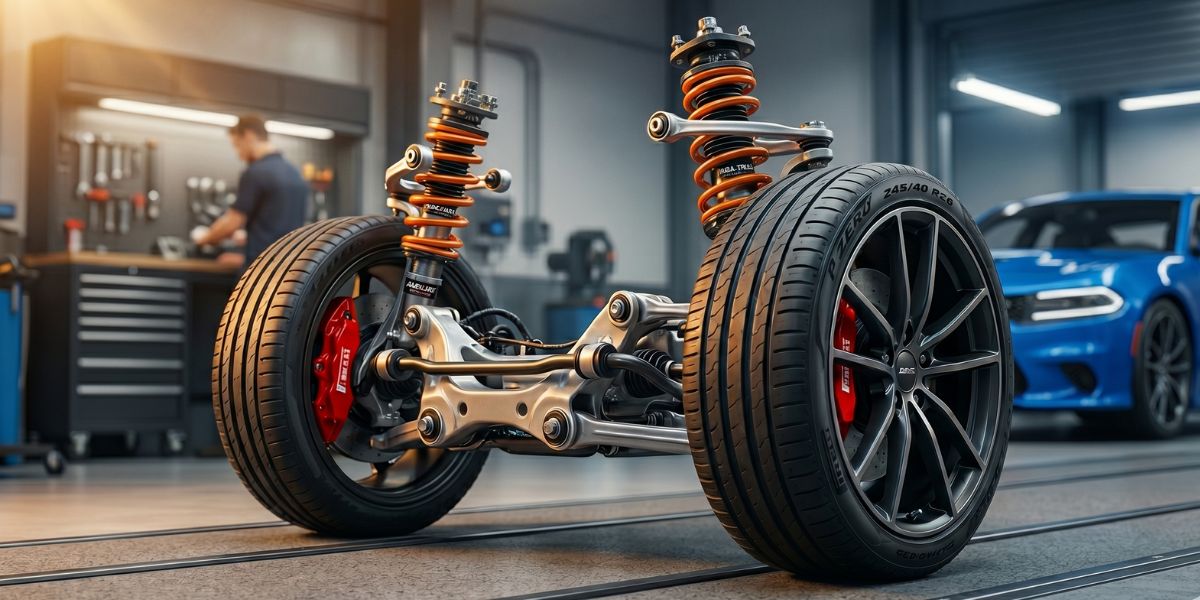
A car suspension system is a network of components that connects your vehicle’s body to its wheels. Its main job is to absorb the energy created by road irregularities — potholes, speed bumps, gravel, uneven pavement — so that energy does not transfer directly into the cabin or destabilize the vehicle.
Think of it this way. Without a suspension system, your car would be a rigid metal box sitting on four rubber tires. Every bump in the road would send a shockwave straight through the frame, into the seats, and into your spine. The vehicle would also lose tire contact with the road on uneven surfaces, making steering and braking unpredictable.
The suspension sits between the chassis (the main frame of the car) and the wheels. It works constantly — even on smooth roads — to keep the tires pressed firmly to the ground and the cabin stable and level.
How Does a Car Suspension System Work?
When a wheel hits a bump, it moves upward. Without any mechanism to manage that movement, the force travels straight into the vehicle frame. The suspension system intercepts that movement through a combination of springs and dampers.
Springs compress when a wheel hits a bump, absorbing the energy of the impact. Once the obstacle is cleared, the spring releases that stored energy and pushes the wheel back down toward the road.
But springs alone create a problem. A spring with no resistance would keep bouncing long after the bump — you would feel like you are riding on a pogo stick. That is where shock absorbers (dampers) come in. They control the speed at which the spring compresses and extends, smoothing out the movement so the car settles quickly and cleanly.
The suspension also interacts directly with your steering system. When you turn the wheel, the suspension geometry determines how your tires respond. A well-maintained suspension means precise, predictable steering. A worn one means vague, wandering handling — which is a serious safety concern at highway speeds.
Key Components of a Car Suspension System
Understanding what makes up the suspension helps you know what to look for when things go wrong. Here are the main components and what each one does.
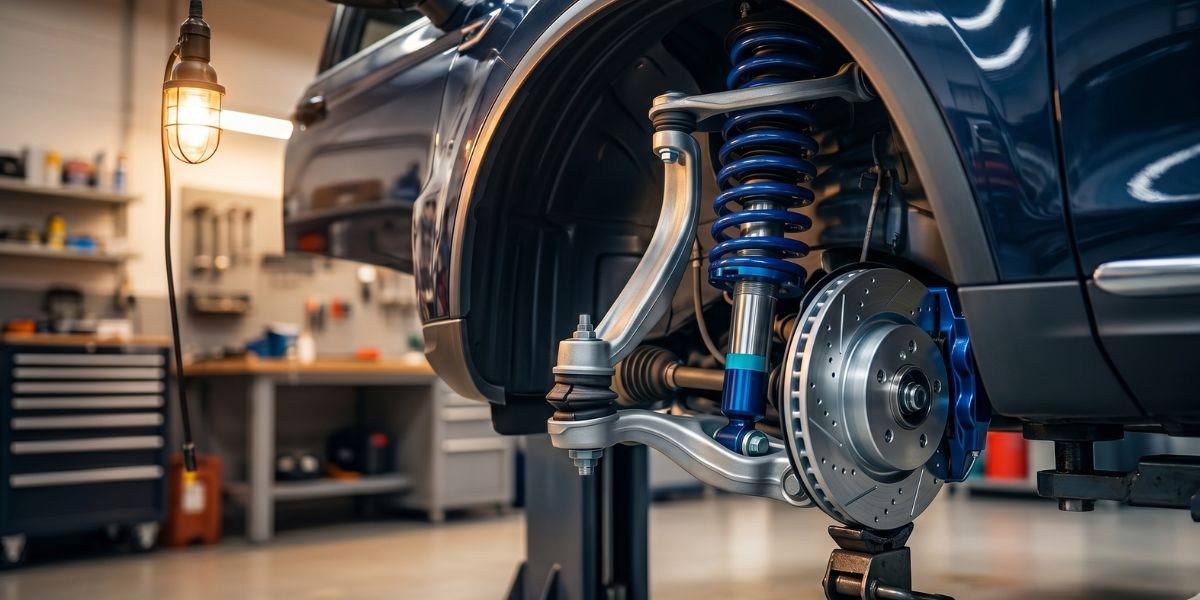
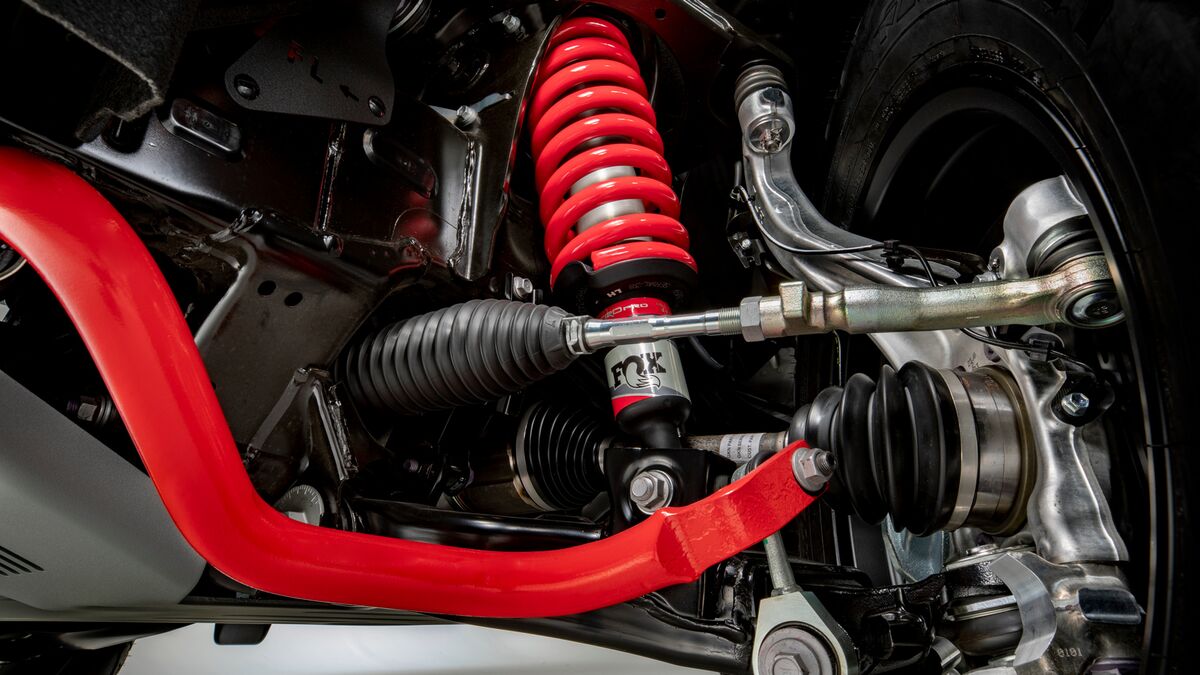
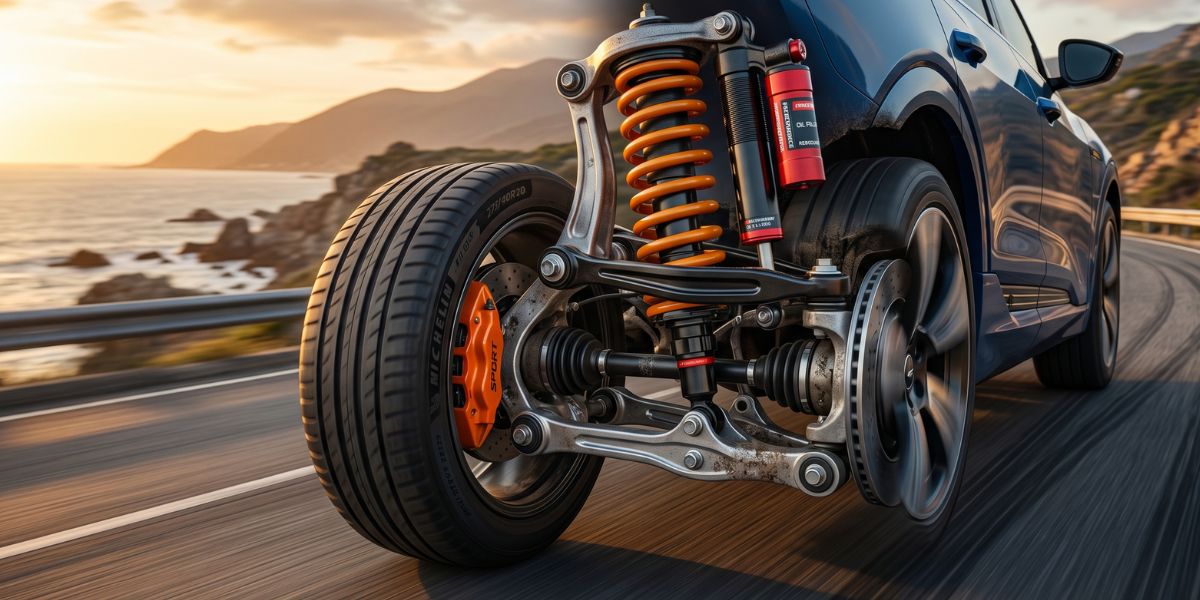
Springs are the foundation of energy absorption. There are three main types: coil springs (the most common, shaped like a spiral), leaf springs (flat, layered metal what is suspension in a car strips used mainly on trucks and older vehicles), and torsion bars (a rod that twists to absorb force). Each stores and releases energy to cushion the ride.
Shock absorbers (also called dampers) sit alongside or inside the springs. They convert the kinetic energy of suspension movement into heat, which dissipates through hydraulic fluid. Without functional shocks, your car would continue bouncing after every bump.
Struts are a structural component that combines a shock absorber and a spring mount into a single unit. Many modern front-wheel-drive vehicles use MacPherson struts because they are compact and cost-effective. Unlike separate shocks, struts also bear the vehicle’s weight and affect wheel alignment.
Control arms are hinged metal arms that connect the wheel hub to the vehicle’s frame. They allow the wheel to move up and down while keeping it in the correct position relative to the body. Most cars have upper and lower control arms.
Ball joints are pivot points that connect the control arms to the wheel hub. They allow the wheel to rotate and move in multiple directions simultaneously. When ball joints wear out, you will often hear a clunking noise on bumps and feel looseness in the steering.
The sway bar (also called an anti-roll bar) is a metal rod that runs across the width of the vehicle and connects the left and right sides of the suspension. When you take a corner, centrifugal force pushes the body outward. The sway bar resists this by transferring force from the more-compressed side to the less-compressed side, keeping the vehicle level.
Tie rods connect the steering rack to the wheel knuckle. While they are technically part of the steering system, they work in close coordination with the suspension. Worn tie rods cause uneven tire wear and imprecise steering.
Bushings are rubber or polyurethane cushions that line the joints between suspension components. They absorb vibration and allow controlled movement between parts. When they wear out, you get noise, vibration, and accelerated wear on surrounding components.
Types of Car Suspension Systems Explained
Not all suspension systems are built the same. The design depends on the vehicle type, intended use, and manufacturer priorities around cost, comfort, and performance.
Independent suspension is the most common type on modern passenger cars. Each wheel moves independently of the others, which means a bump on one side does not affect the opposite wheel. This improves ride comfort and handling significantly. The most common variants are:
- MacPherson Strut — simple, lightweight, widely used on front axles of mainstream cars
- Double Wishbone — more complex but offers superior handling; common on sports cars and performance SUVs
- Multi-link — uses multiple arms to allow precise control of wheel movement; found on premium vehicles
Non-independent (solid axle) suspension connects both wheels on an axle with a rigid beam. When one wheel hits a bump, the other is affected. This design is simpler, stronger, and cheaper — which is why you still find it on trucks, off-road vehicles, and heavy-duty SUVs. It handles loads well but sacrifices ride comfort on regular roads.
Air suspension replaces traditional coil springs with air-filled bags that can be inflated or deflated. This allows the vehicle to adjust its ride height and stiffness on the fly. It is common on luxury vehicles like Mercedes-Benz S-Class and Range Rover, and also on heavy commercial trucks where load management is critical.
Adaptive or electronic suspension takes air suspension a step further. Sensors monitor road conditions, vehicle speed, and driver inputs in real time, and the system adjusts damping force within milliseconds. Brands like BMW, Audi, and Porsche offer this on performance models. It delivers a smooth ride in comfort mode and a firm, precise feel when you push the vehicle harder.
Signs Your Car Suspension System Needs Attention
Suspension wear is gradual. Most drivers do not notice it until the system has deteriorated significantly. Here are the warning signs to look out for.
The ride feels unusually rough or bouncy. If you feel every bump and crack more than you used to, the shock absorbers are likely worn. A simple test: push down firmly on the front corner of your parked car and release. If the car bounces more than twice, the shocks need replacing.
The car pulls to one side. If your vehicle drifts left or right when you are trying to drive straight, it could be a suspension or alignment issue — or both. Do not ignore this; it forces constant steering correction and wears your tires unevenly.
Nose-diving when you brake. A properly functioning suspension keeps the vehicle level under braking. If the front dips dramatically when you slow down, the front shocks or struts are worn.
Uneven tire wear. Take a look at your tires from time to time. If one side of the tread is wearing faster than the other, or if you see cupped or scalloped patterns across the tread, the suspension geometry is off.
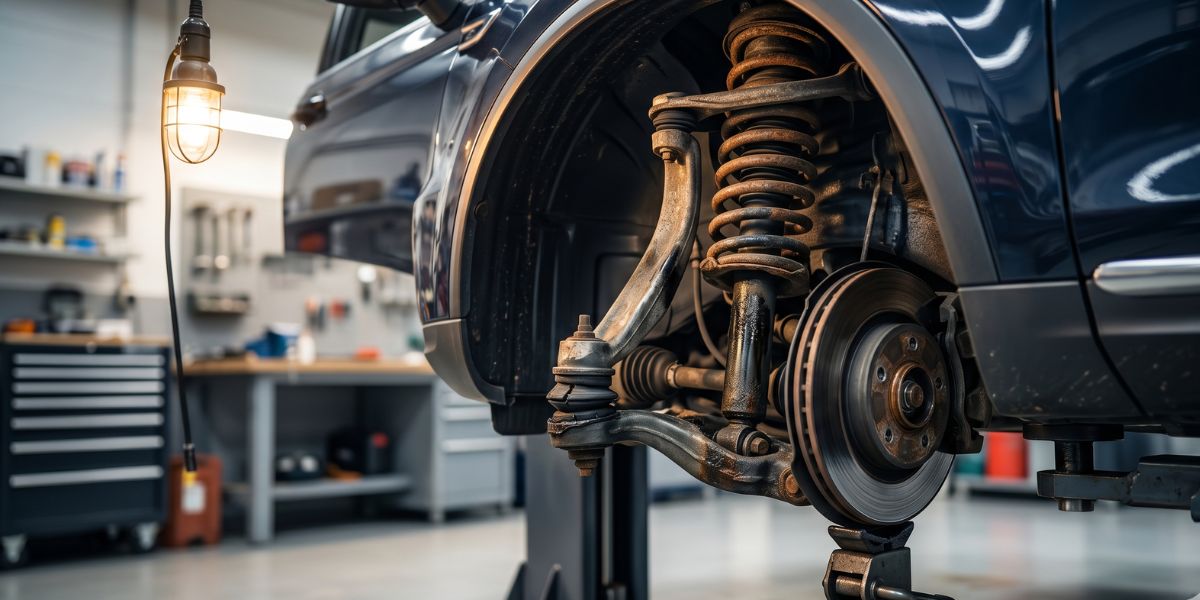
Clunking or knocking noises over bumps. This is often a sign of worn ball joints, loose control arm bushings, or a broken sway bar link. These noises should be investigated promptly — a failed ball joint can cause the wheel to collapse under the car without warning.
Difficulty steering. If the steering feels loose, heavy, or you notice vibration in the wheel, worn tie rods or ball joints are often the cause.
When symptoms are mild, a qualified mechanic can often handle the repair at a reasonable cost. If you notice multiple symptoms at once, or if any noise is loud and sudden, have the vehicle inspected immediately.
How to Maintain Your Car Suspension System
The good news is that suspension maintenance is straightforward. It does not require specialist knowledge — just consistent attention.
Get a wheel alignment check once a year or any time you hit a particularly hard pothole. Misalignment strains the suspension components and wears tires unevenly. It is one of the most affordable preventive services you can do.
Rotate and balance your tires every 5,000 to 7,500 miles. Uneven tire wear can mask suspension problems and vice versa. Regular rotation makes it easier to spot abnormal wear patterns early.
Have the suspension inspected during routine servicing. Most mechanics will check ball joints, bushings, and shock absorbers during an oil change or annual service. Ask specifically for this if your garage does not include it as standard.
Avoid overloading your vehicle. Every car has a maximum load rating. Regularly exceeding it compresses the springs beyond their design range and accelerates wear on every connected component.
Address small problems early. A worn bushing costs relatively little to replace. If you ignore it, the resulting vibration and movement wear out the surrounding components — and now you are looking at a much larger bill.
The cost of suspension repairs varies widely. Replacing a pair of shock absorbers typically runs between $250 and $600 depending on the vehicle. Strut replacement can be $400 to $900 per axle. Ball joint replacement sits in the $150 to $400 range. Ignoring these repairs means worse handling, increased tire wear, and potentially a vehicle that is not safe to drive.
Suspension System vs. Steering System — What Is the Difference?
These two systems are closely related, and problems with one often affect the other. But they are not the same thing.
The suspension system manages vertical movement — it absorbs bumps and keeps the tires in contact with the road.
The steering system manages directional movement — it translates input from the steering wheel into left and right movement of the wheels.
They share several components, particularly tie rods and ball joints, which is why a failing suspension often produces steering symptoms. A car that pulls to one side might have a worn suspension component rather than a steering fault. Getting a proper diagnosis matters — treating the wrong system wastes money and leaves the real problem unresolved.
How Suspension Affects Your Safety and Driving Experience
This is the most important section of this guide. Suspension is not a comfort feature — it is a safety system.
Braking distance increases with worn suspension. When shock absorbers are degraded, tires bounce slightly on the road surface rather than maintaining constant contact. That brief, repeated loss of contact during braking extends stopping distances. In an emergency stop at 60 mph, that can mean several additional feet — which could be the difference between stopping in time or not.
Cornering stability depends on suspension integrity. When you take a bend, the suspension manages the transfer of weight to the outer wheels. A compromised sway bar or worn control arm bushings allows excessive body roll, which reduces grip and can lead to loss of control.
Tire longevity is tied directly to suspension health. Misaligned or worn suspension causes uneven loading on the tires. This creates hot spots in the rubber and accelerates wear on specific areas of the tread. Replacing tires because of poor suspension is expensive and avoidable.
Wet roads are particularly unforgiving. On dry roads, worn suspension is a problem. On wet roads, it becomes a serious hazard. The margin for error when aquaplaning or braking on a slippery surface is slim, and a vehicle with degraded suspension handles those situations significantly worse.
FAQs
What does a car suspension system do?
It connects your vehicle’s body to its wheels, absorbs shocks from road irregularities, maintains tire contact with the road, and keeps the vehicle stable during steering, braking, and acceleration.
How long does a car suspension system last?
Individual components have different lifespans. Shock absorbers typically last 50,000 to 100,000 miles. Springs can last the life of the vehicle under normal conditions. Ball joints and bushings vary widely depending on road conditions and driving style.
How much does it cost to repair a car suspension system?
Costs range from around $150 for a single ball joint replacement to over $2,000 for a full strut replacement on both axles of a premium vehicle. Getting multiple quotes and addressing issues early keeps costs manageable.
Can I drive with a bad suspension system?
Technically, yes. Practically, it is inadvisable. A failing suspension increases stopping distances, makes the vehicle harder to control, accelerates tire wear, and can cause secondary damage to other components. Driving with a known suspension fault is a safety risk.
What are the most common suspension problems?
Worn shock absorbers, deteriorated bushings, failed ball joints, broken sway bar links, and wheel misalignment are the most frequently encountered issues. Most can be identified during a standard inspection.
What is the difference between shocks and struts?
A shock absorber is a standalone damping component. A strut integrates a shock absorber with a structural support element that also bears the vehicle’s weight. They are not interchangeable — the repair process and cost differ between them.
Does the suspension system affect fuel efficiency?
Yes. Worn suspension causes uneven tire wear and increases rolling resistance, both of which reduce fuel economy. Proper wheel alignment and functional suspension components help maintain the efficiency your vehicle was designed to deliver.
Conclusion
Your car’s suspension system works on every single drive, on every surface, in every weather condition. It protects you from road impacts, keeps your tires planted, and gives you the control you need in an emergency.
The most important takeaway from this guide is simple: do not wait for a major problem before paying attention to your suspension. The warning signs are usually subtle at first — a slightly rougher ride, a faint clunk over bumps, tires wearing just a little unevenly. Catch these early, and you are looking at a minor repair. Ignore them, and the cost — financial and in terms of safety — grows quickly.
If you have not had your suspension inspected in the last year, book a service. Ask your mechanic to specifically check the shock absorbers, ball joints, and bushings. It is one of the most straightforward things you can do to keep your vehicle safe and performing the way it should.