
Most drivers don’t think about their suspension until something goes wrong. A strange clunk over a pothole. A ride that suddenly feels rough and bouncy. A car that pulls to one side for no obvious reason. By the time those symptoms show up, the suspension has usually been struggling for a while.
The truth is, your suspension system does far more than smooth out your commute. It’s one of the most important safety systems on your vehicle — and understanding what it does (and why it matters) can save you money, protect your tires, and keep you safer on the road.
In this guide, you’ll get a plain-language breakdown of exactly what suspension does on a car, how each component works, and what happens when the system starts to wear out.
What Is a Car Suspension System?
Your car’s suspension system is the network of parts that connects your wheels to the rest of the vehicle. It sits between the road and the car’s body, doing the hard work of managing everything that happens between those two surfaces.
Think of it like your body’s knees and ankles. When you walk on uneven ground, your joints absorb the impact so the rest of your body doesn’t take the full force of every step. Your car’s suspension does the same thing — only it’s managing forces at highway speeds, through sharp corners, and over obstacles your car hits dozens of times a day.
Without suspension, every bump in the road would travel straight through the frame of the car and into the cabin. The car would bounce uncontrollably. Steering would be nearly impossible. Braking would be dangerously unpredictable.
Early cars, in fact, had very little suspension. Drivers felt every stone and rut in the road. As vehicles got faster and roads got more varied, engineers developed increasingly sophisticated suspension systems to make cars both safer and more comfortable.
Today’s suspension systems are refined, complex, and built to last — but they do wear out. Knowing what the system is supposed to do makes it much easier to recognize when something is wrong.
What Does Suspension Do on a Car? The 4 Core Jobs
1. Absorbs Road Shocks and Bumps
This is the job most people associate with suspension — and for good reason. It’s the most noticeable function.
Every time your car rolls over a pothole, a speed bump, or a rough patch of road, a massive amount of energy needs to go somewhere. Without suspension, that energy goes directly into the car’s frame and passengers. With a properly working suspension system, shocks and struts convert that kinetic energy into heat and release it harmlessly.
The result is a smooth, controlled ride instead of a jarring, bone-rattling one.
When shocks and struts wear out, they stop absorbing that energy effectively. The car starts to bounce. Every bump feels bigger. Long drives become genuinely uncomfortable. And that constant bouncing puts stress on every other component connected to the wheels — accelerating wear across the entire system.
2. Keeps Your Tires on the Road
This one surprises a lot of people. Suspension isn’t just about comfort — it’s about grip.
For your car to steer, brake, and accelerate properly, your tires need to maintain consistent contact with the road surface. Roads aren’t perfectly flat. They dip, crown, and change texture constantly. Your suspension system works continuously to keep each tire pressed firmly against the road regardless of what the surface is doing.
When suspension wears out, tires start to lose that consistent contact. They bounce slightly off the surface over bumps instead of hugging it. That might seem minor, but it has serious consequences:
- Braking becomes less effective because the tire isn’t fully planted when you press the pedal
- Acceleration creates wheel hop on rougher surfaces
- Cornering grip decreases because the tire can’t maintain full contact through a turn
A car with worn suspension doesn’t just ride rough. It handles unpredictably — and that’s where safety becomes a real concern.
3. Controls the Direction and Stability of the Car
Your steering system and your suspension system are deeply connected. Almost every component that allows you to steer — tie rods, ball joints, control arms — is also part of, or directly attached to, the suspension.
When you turn the steering wheel, the input travels through the steering column, through the tie rods, and moves the front wheels. The suspension geometry — the angles at which the wheels sit — determines how precisely and predictably that input translates into actual direction change.
Sway bars (also called stabilizer bars) play a big role here too. When you take a corner, the weight of the car shifts toward the outside of the turn. Without sway bars, the car would lean dramatically — reducing tire contact on the inside wheels and making the car feel unstable. Sway bars link the left and right sides of the suspension together, resisting that lean and keeping the car flatter through turns.
When suspension components wear out, this control degrades. The car may pull to one side. Steering may feel loose or vague. Corners that used to feel confident start to feel uncertain. These aren’t just comfort issues — they’re handling and safety issues.
4. Supports the Weight of the Vehicle
Springs — whether coil springs, leaf springs, or torsion bars — carry the static weight of the vehicle at all times. Every pound of the car’s body, engine, passengers, and cargo is supported by the suspension springs.
This load-bearing function is separate from the damping function of shocks and struts. Springs hold the car up. Shocks and struts control how the springs move. Together, they manage both the weight and the motion of the vehicle.
When you add weight to a car — extra passengers, a full trunk, a trailer — the suspension has to work harder to maintain the same ride height and handling behavior. Overloading a vehicle beyond its rated capacity puts serious stress on suspension components and can cause them to wear out much faster than expected.
Main Components of a Car Suspension System
Springs
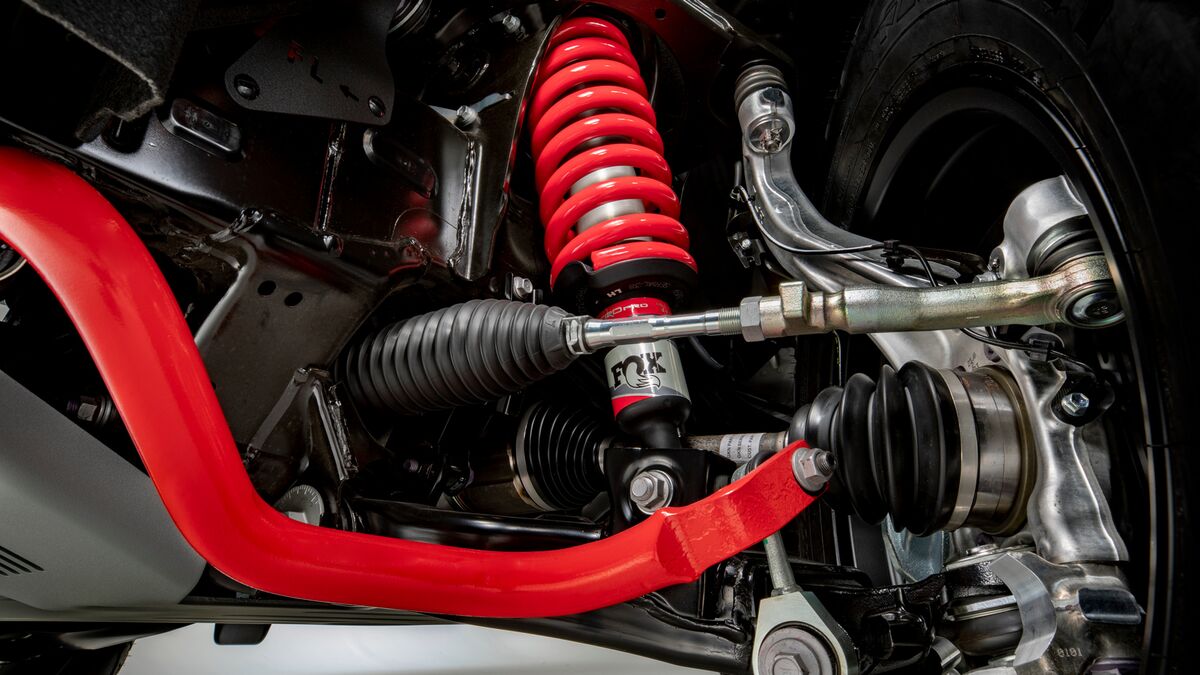
Springs are the foundation of the suspension system. They carry the vehicle’s weight and allow the wheels to move up and down independently of the body.
- Coil springs are the most common type on modern passenger cars. They’re compact, durable, and used on both front and rear suspensions.
- Leaf springs are stacks of curved metal strips used mainly on trucks, vans, and older vehicles. They’re excellent for heavy loads.
- Torsion bars use a twisting metal rod instead of a coil. They’re found on some SUVs and older trucks.
Shock Absorbers
Shock absorbers (or just “shocks”) dampen the movement of the springs. Without them, the car would bounce up and down continuously every time it hit a bump — like a mattress with no damping material.
Shocks don’t carry any weight. Their only job is to control how fast and how far the springs compress and rebound. They do this using hydraulic fluid that is forced through small valves as the shock compresses, converting movement into heat.
Struts
Struts are often confused with shocks, and understandably so — they do include a shock absorber inside. But a strut also serves as a structural component of the suspension. It replaces the upper control arm and provides a mounting point for the coil spring.
Because struts are structural, replacing them is more involved than replacing standalone shocks. And because they affect wheel alignment when replaced, an alignment check is always recommended after strut replacement.
Control Arms and Ball Joints
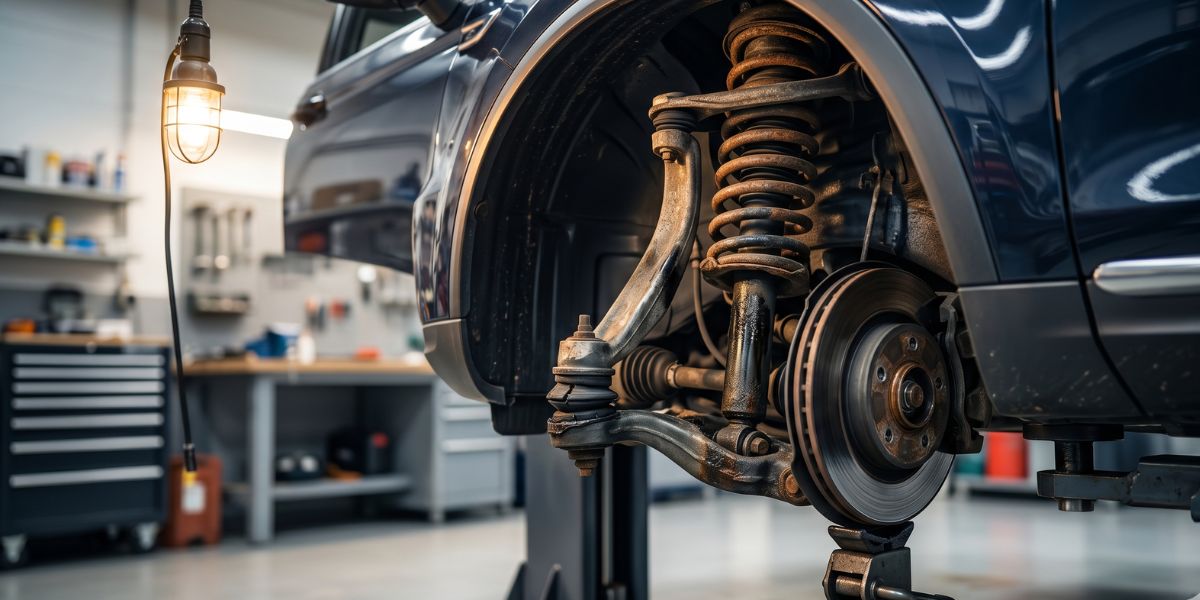
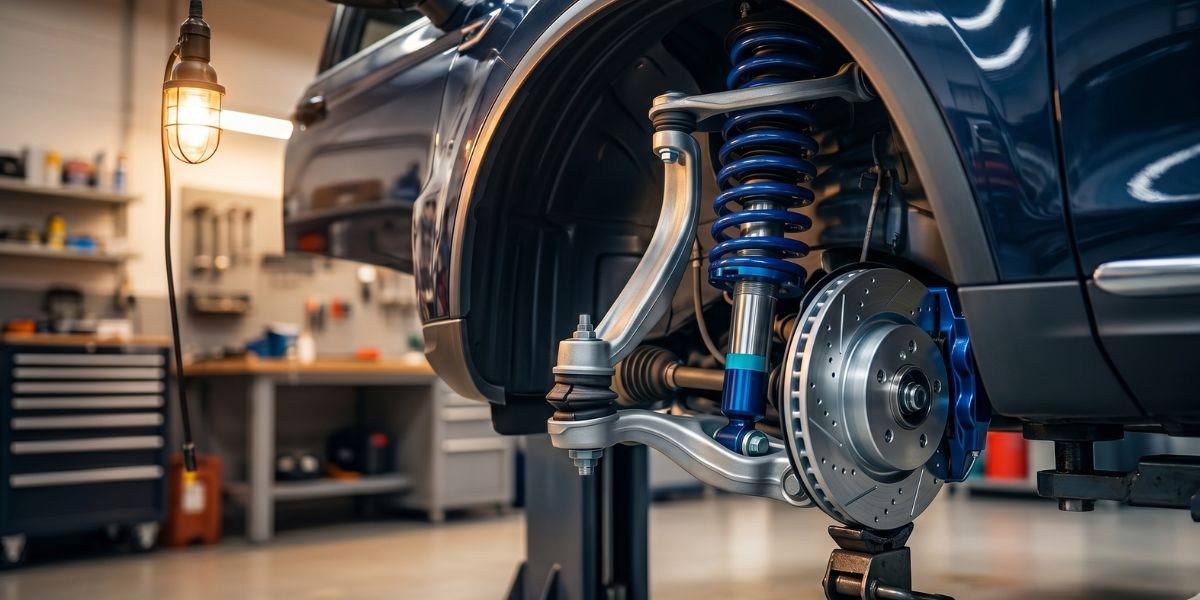
Control arms are the hinged links that connect the wheel assembly to the vehicle’s frame. They allow the wheels to move up and down while keeping them properly positioned relative to the car.
Ball joints are the pivot points at the ends of the control arms — think of them like the ball-and-socket joint in your hip. They allow multi-directional movement while keeping everything connected.
Ball joints are critical safety components. A severely worn ball joint can separate entirely while driving, causing sudden, complete loss of control. This is one suspension issue that should never be ignored.
Sway Bars (Stabilizer Bars)
Sway bars connect the left and right sides of the suspension across the axle. When one side of the car dips in a corner, the sway bar transfers some of that force to the other side, keeping the car level.
The connections between the sway bar and the rest of the suspension — sway bar links and bushings — are relatively small components that wear out regularly. A broken sway bar link often produces a distinctive rattling or clunking noise on bumpy roads.
Tie Rods
Tie rods connect the steering rack to the steering knuckle at each wheel. When you turn the wheel, tie rods are what actually push and pull the front wheels into the new direction.
Worn tie rods create play in the steering — meaning the wheel can move slightly before the car actually responds. This feels like loose or vague steering and makes precise maneuvering harder. Worn tie rods also cause toe misalignment, which leads to rapid, uneven tire wear.
Types of Car Suspension Systems
Not all suspension systems are built the same way. The design used depends on the vehicle’s purpose, price point, and performance goals.
Independent vs. Solid Axle Suspension
In an independent suspension system, each wheel can move up and down on its own without affecting the other wheels on the same axle. This is standard on most modern passenger cars and provides better ride quality and handling.
In a solid axle (or live axle) setup, both wheels on the same axle are connected. When one wheel hits a bump, it affects the other. This design is simpler and stronger — which is why it’s still used on heavy-duty trucks and off-road vehicles.
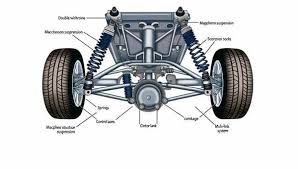
MacPherson Strut Suspension
The MacPherson strut is the most widely used front suspension design in the world. It combines the shock absorber and structural support into a single compact unit. It’s simple, affordable, and takes up less space — making it ideal for front-wheel-drive vehicles with tight engine bays.
Double Wishbone Suspension
Double wishbone suspension uses two wishbone-shaped control arms (one upper, one lower) to guide each wheel. This design offers better control of wheel movement and is preferred for performance and luxury vehicles where handling precision matters more than packaging simplicity.
Multi-Link Suspension
Multi-link suspension uses three or more links to control each wheel independently. It offers an excellent balance of ride comfort and handling performance and is increasingly common on modern sedans, crossovers, and SUVs.
Leaf Spring Suspension
Leaf springs are still widely used on trucks, vans, and commercial vehicles because of their load-bearing strength. A single leaf spring can support far more weight than a coil spring of comparable size — making them the practical choice for vehicles that regularly carry heavy loads.
How Does Suspension Affect Your Driving Experience?
The condition of your suspension has a direct impact on almost every aspect of how your car feels and performs.
Ride comfort is the most obvious one. A well-maintained suspension absorbs road imperfections smoothly. A worn one lets every bump and crack transfer straight into the cabin.
Handling and cornering depend heavily on suspension what is a car suspension system geometry and component condition. When everything is in good shape, the car responds predictably and confidently to steering inputs. When components are worn, handling becomes vague, slow to respond, or unpredictable.
Braking performance is directly tied to suspension health. Worn shocks mean tires bounce off the road surface slightly under braking — reducing the contact patch and increasing stopping distance. Research has shown that badly worn shocks can add up to 20% to stopping distance at highway speeds. That’s a significant safety margin to lose.
Tire lifespan is also affected. Good suspension keeps tires wearing evenly across their full contact surface. Worn suspension causes uneven loading — leading to cupping, feathering, or edge wear that shortens tire life and often signals the suspension problem before any other symptom appears.
Fuel efficiency is the least obvious connection, but it’s real. Worn suspension increases rolling resistance and causes tires to wear unevenly, which reduces fuel efficiency over time. It’s a minor effect compared to the others — but worth noting.
What Happens When Your Suspension Goes Bad?
Suspension components wear out gradually. There’s rarely a single dramatic moment of failure — it’s a slow degradation that can be easy to miss if you’re not paying attention.
Common warning signs include:
- A ride that feels rougher or bouncier than it used to
- Clunking or knocking noises when going over bumps
- The car pulling to one side while driving straight
- Uneven or accelerated tire wear
- A steering wheel that vibrates or feels loose
- The car nose-diving under braking or leaning heavily in corners
- Visible fluid leaking from shocks or struts
One of the most important things to understand is that suspension components are interconnected. When one part wears out and isn’t replaced, it puts extra stress on the components around it. A worn sway bar link stresses the sway bar bushings. Worn control arm bushings stress the ball joints. Left long enough, one small repair becomes several larger ones.
The cost of ignoring suspension problems adds up fast — in repair bills, in tire replacement, and in the reduced safety margin that worn suspension creates every time you drive.
How Long Does Car Suspension Last?
There’s no single answer because different components have different lifespans — and road conditions, driving habits, and vehicle type all play a role.
General guidelines by component:
- Shock absorbers and struts: 50,000 – 100,000 miles
- Ball joints: 70,000 – 150,000 miles
- Control arm bushings: 60,000 – 100,000 miles
- Sway bar links: 50,000 – 100,000 miles
- Tie rod ends: 60,000 – 100,000 miles
- Springs: Often last the life of the vehicle, but can break or sag over time
These are rough ranges. Driving on rough roads, hitting potholes frequently, or regularly carrying heavy loads can cut these numbers significantly.
A good rule of thumb: have your suspension visually inspected every 50,000 miles, or whenever you have your tires rotated or brakes serviced. Many shops will do this as part of a routine service at no extra charge.
Can You Upgrade or Modify Your Suspension?
Yes — and many drivers do, for a variety of reasons.
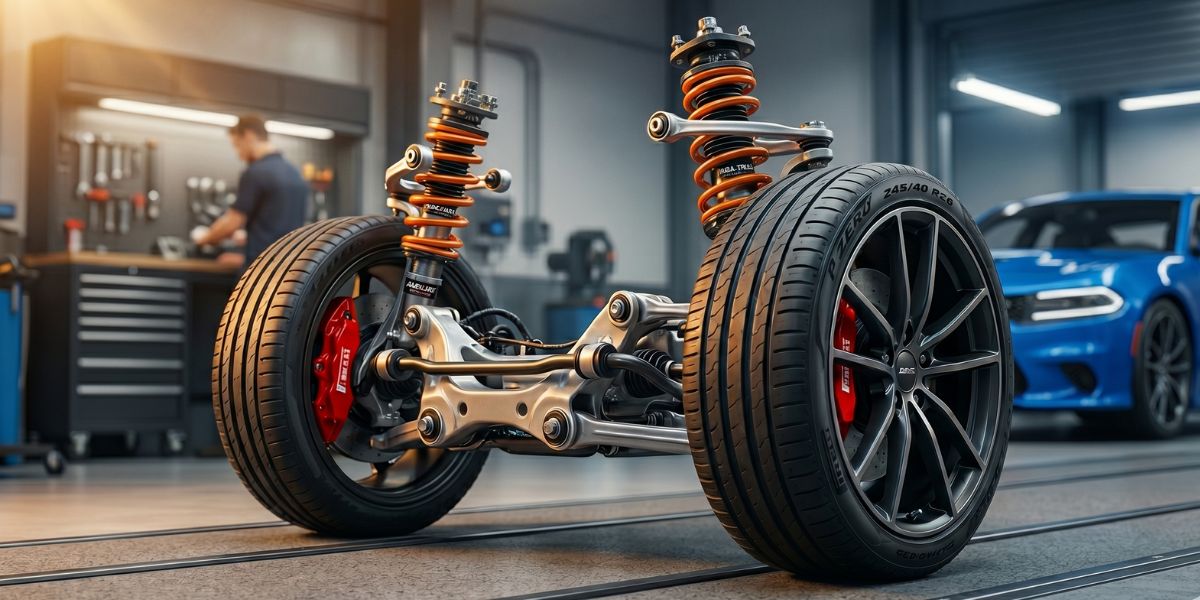
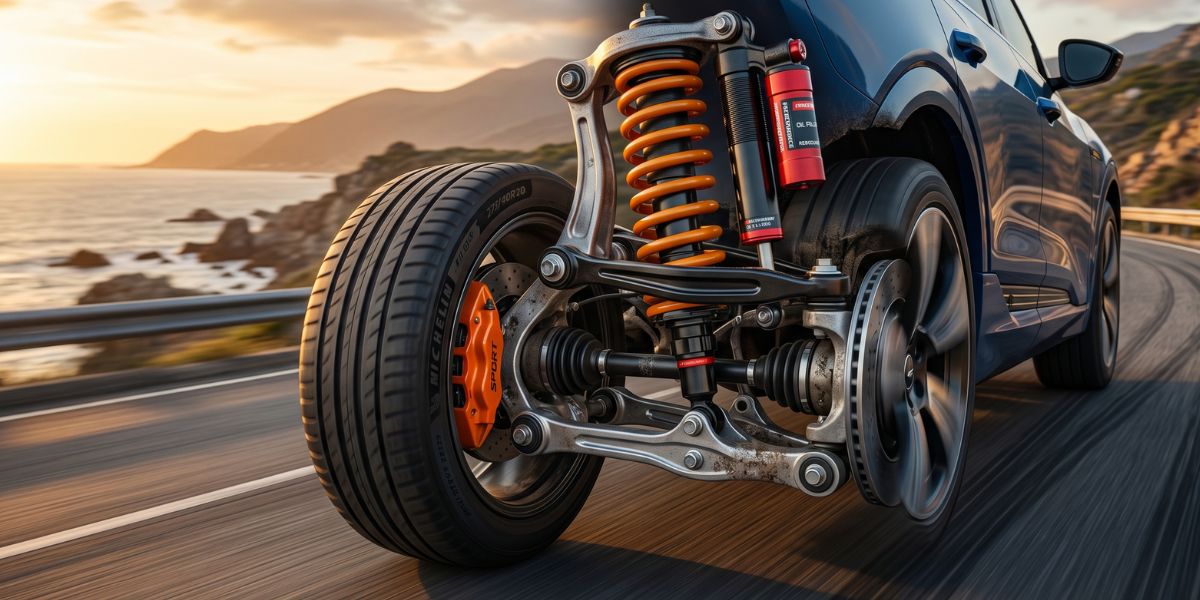
Performance upgrades replace factory shocks and struts with firmer, more responsive components designed for spirited driving or track use. Coilover kits allow you to adjust ride height and damping stiffness independently.
Lift kits raise the ride height on trucks and SUVs for off-road clearance. They typically require upgraded shocks, longer control arms, and sometimes adjustments to the steering geometry.
Lowering springs reduce ride height for improved handling and aesthetics. They work with factory shocks in mild applications, but pairing them with matched performance shocks produces better results.
A word of caution: suspension modifications affect the entire geometry of your vehicle. Poorly chosen or improperly installed upgrades can make handling worse, accelerate tire wear, and — in extreme cases — create dangerous handling characteristics. Always have modifications done by someone who understands the engineering behind what they’re changing.
Suspension Maintenance Tips Every Driver Should Know
You don’t need to be a mechanic to take good care of your suspension. A few simple habits go a long way.
Get a suspension inspection every 50,000 miles. Many shops include this with routine service visits. It takes minutes and catches wear before it becomes a problem.
Check your tires regularly. Uneven tire wear is often the first visible sign of suspension trouble. If you notice cupping, feathering, or edge wear, have your suspension and alignment checked before buying new tires.
Avoid overloading your vehicle. Every car and truck has a rated payload capacity. Regularly exceeding it stresses your suspension springs and shortens the life of every connected component.
Slow down for potholes when possible. A single hard impact at speed can damage or misalign suspension components that were otherwise in good shape.
Get an alignment check after any significant impact. Hitting a large pothole or curb at speed, or being involved in even a minor front-end collision, can shift your suspension geometry enough to cause uneven tire wear and handling issues.
Conclusion
Your car’s suspension system quietly does some of the most important work on your vehicle — every single mile you drive.
It smooths out your ride, keeps your tires planted on the road, allows you to steer with precision, and supports the full weight of your vehicle and everything in it. When it’s working well, you don’t notice it. When it starts to fail, everything suffers — your comfort, your tires, your braking, your handling, and ultimately your safety.
The good news is that suspension wear is gradual and usually gives you plenty of warning before it becomes a serious problem. Knowing what the system does — and what to watch for — puts you in a position to catch those early signs and address them before they turn into expensive repairs.
If you haven’t had your suspension inspected recently, or if any of the symptoms in this guide sound familiar, it’s worth booking a check-up with a trusted mechanic. It’s a quick inspection that can tell you a lot about the health of one of your car’s most critical systems.
FAQs
What does suspension do on a car in simple terms?
Suspension connects your wheels to your car’s body and manages everything that happens between them. It absorbs road bumps, keeps your tires in firm contact with the ground, helps you steer accurately, and supports the vehicle’s weight. Without it, every bump would jolt straight through the car and driving would be both extremely uncomfortable and genuinely dangerous.
Does suspension affect how fast a car stops?
Yes — significantly. Worn suspension reduces the tire’s consistent contact with the road surface, which directly increases braking distance. Research shows that badly worn shocks and struts can increase stopping distance by up to 20% at highway speeds. That’s several extra car lengths that can make the difference in an emergency stop.
What is the difference between shocks and struts?
Shocks are standalone damping components — they control spring movement but don’t carry any structural load. Struts combine a shock absorber with a structural support element into one unit, replacing the upper control arm on many vehicles. Whether your car uses shocks or struts depends on how it was designed — many vehicles use struts on the front and shocks on the rear.
How do I know if my suspension needs replacing?
The most common signs are a rough or bouncy ride, clunking or knocking noises over bumps, the car pulling to one side, uneven tire wear, a vibrating steering wheel, or the car leaning heavily in corners. If you notice any of these, a suspension inspection will quickly identify which components need attention.
Does suspension affect tire wear?
Absolutely. Worn or misaligned suspension causes uneven loading across the tire’s contact surface, leading to cupping, feathering, or heavy edge wear. If you find yourself replacing tires sooner than expected, the suspension is often the root cause — and replacing tires without fixing the suspension just means the new ones will wear out unevenly too.
Is suspension the same as alignment?
No, but they’re closely connected. Alignment refers to the angles at which your wheels are positioned relative to the road and each other. Suspension is the physical system of components that holds everything in place. Worn suspension parts frequently cause alignment to shift — which is why both should always be checked together, and why an alignment is recommended any time suspension components are replaced.
Can bad suspension damage other parts of the car?
Yes. Worn suspension puts extra stress on tires, wheel bearings, steering components, and brakes. Because everything is interconnected, one failing component tends to accelerate wear on the parts around it. Catching and fixing problems early almost always costs less than waiting for the damage to spread.
What’s the difference between soft and stiff suspension?
Soft suspension compresses more easily, which absorbs bumps smoothly and prioritizes passenger comfort — but it allows more body lean in corners. Stiff suspension resists movement more firmly, keeping the car flatter and more controlled in turns — but it transfers more road harshness to the cabin. Luxury cars tend toward softer setups. Sports and performance cars use stiffer ones. Most everyday vehicles sit somewhere in the middle.