
Hiring the wrong marine electrical contractor isn’t just a minor inconvenience—it is a decision that can lead to catastrophic system failures, life-threatening safety hazards, and astronomical repair costs at sea. Whether you are managing a massive commercial fleet, a luxury yacht, or a rugged fishing boat, your electrical system is the central nervous system of your vessel. When the power fails in the middle of the ocean, your performance, navigation, and life-support systems go with it.
So, how do you distinguish a true marine expert from a standard residential electrician who happens to own a boat? In this comprehensive guide, we break down the seven critical factors you must evaluate before signing a contract to ensure your vessel remains powered, compliant, and safe.
⚙️ Why Specialized Marine Expertise is Non-Negotiable
The marine environment is one of the most hostile settings for electrical components. Unlike land-based systems, marine electronics are subjected to three constant enemies: Saltwater Corrosion, High Humidity, and Constant Vibration.
- Electrolysis and Galvanic Corrosion: Improper wiring can lead to stray currents that literally eat away at your hull or drive units.
- Vibration-Induced Failure: Standard wire nuts or brittle land-based cables will shake loose or crack under the constant pounding of the sea.
- Safety Compliance: International maritime laws are strict. Non-compliant wiring can void your insurance policy or lead to heavy fines during inspections.
🔍 7 Key Factors to Evaluate Your Contractor
1. Deep Experience in Marine-Specific Systems
Experience in “electrical work” is not the same as experience in “marine electrical work.” A contractor with a decade of hands-on marine experience understands the nuances of DC (Direct Current) systems common on boats, alongside the complex AC (Alternating Current) systems required for larger vessels.
They should demonstrate an understanding of load balancing—ensuring that when you turn on your air conditioning, your navigation radar doesn’t flicker out. Ask potential contractors: “Have you worked on vessels with similar power requirements to mine?” or “Can you provide a case study of a complex troubleshooting job you solved at a port?”
2. Certifications: ABYC, IEC, and Beyond
Certifications are the only way to verify that a contractor actually knows the rules. The ABYC (American Boat & Yacht Council) and IEC (International Electrotechnical Commission) set the “gold standards” for marine wiring. These standards dictate everything from the color of the wires used to how far a wire must be supported from a terminal.
Working with a certified contractor means your vessel will pass a marine survey with flying colors, maintaining its resale value and ensuring insurance coverage in the event of an accident.
3. A Comprehensive Range of Technical Services
You don’t want to hire one company for the design, another for the installation, and a third for repairs. This fragmentation leads to “finger-pointing” when something goes wrong. A top-tier marine electrical contractor should offer:
- System Design: Creating blueprints for new builds or major refits.
- Advanced Troubleshooting: Using thermal imaging and multimeters to find “ghost” draws in your battery bank.
- Switchgear & Power Management: Installing systems that automatically switch between shore power, generators, and battery inverters.
4. Global Mobile Capability (The “Anywhere” Factor)
For commercial operators and long-range cruisers, your home port is rarely where the breakdown happens. Does the contractor have the logistics to send a technician to a remote shipyard? Do they have mobile repair units equipped with the specialized tools needed for marine diagnostics? Reliability means being there when the vessel is docked, not just when it’s convenient for the shop.
5. Specialized Knowledge of Your Vessel Type
The electrical needs of a commercial container ship are vastly different from a luxury superyacht or an offshore oil platform. Luxury yachts focus on “clean power” for sensitive AV systems and lighting, while commercial vessels focus on redundancy and heavy-duty motor control. Ensure your contractor speaks the language of your specific industry.
6. Emergency Response and 24/7 Support
In the maritime world, “Time is Money.” A commercial vessel stuck at the dock because of a faulty winch motor or a dead navigation console loses thousands of euros every hour. Ask about their Service Level Agreement (SLA). Will they guarantee a technician on-site within 24 or 48 hours? If they can’t promise a quick response, they aren’t the right partner for a professional operation.
7. Transparency in Track Record and Documentation
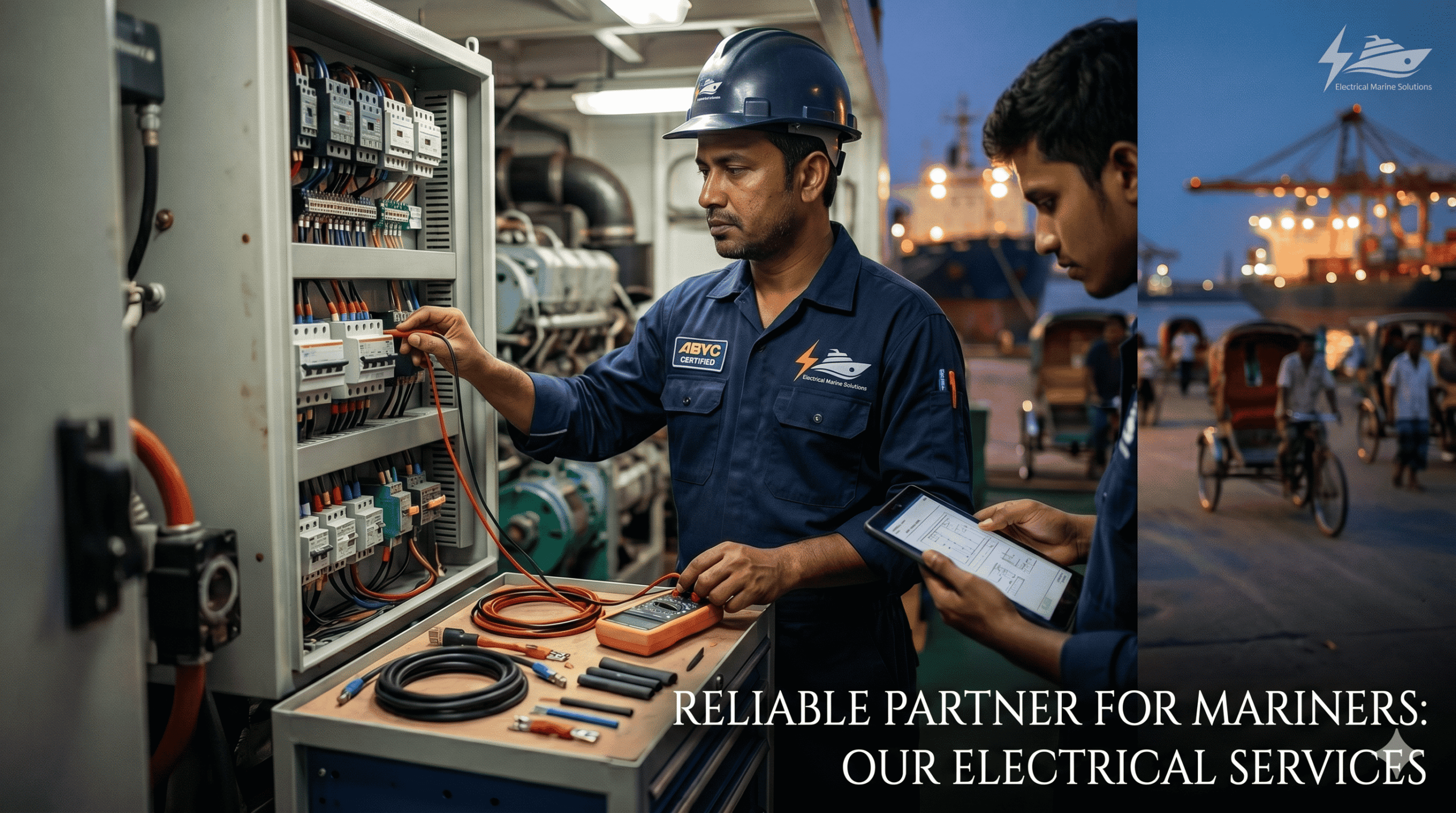
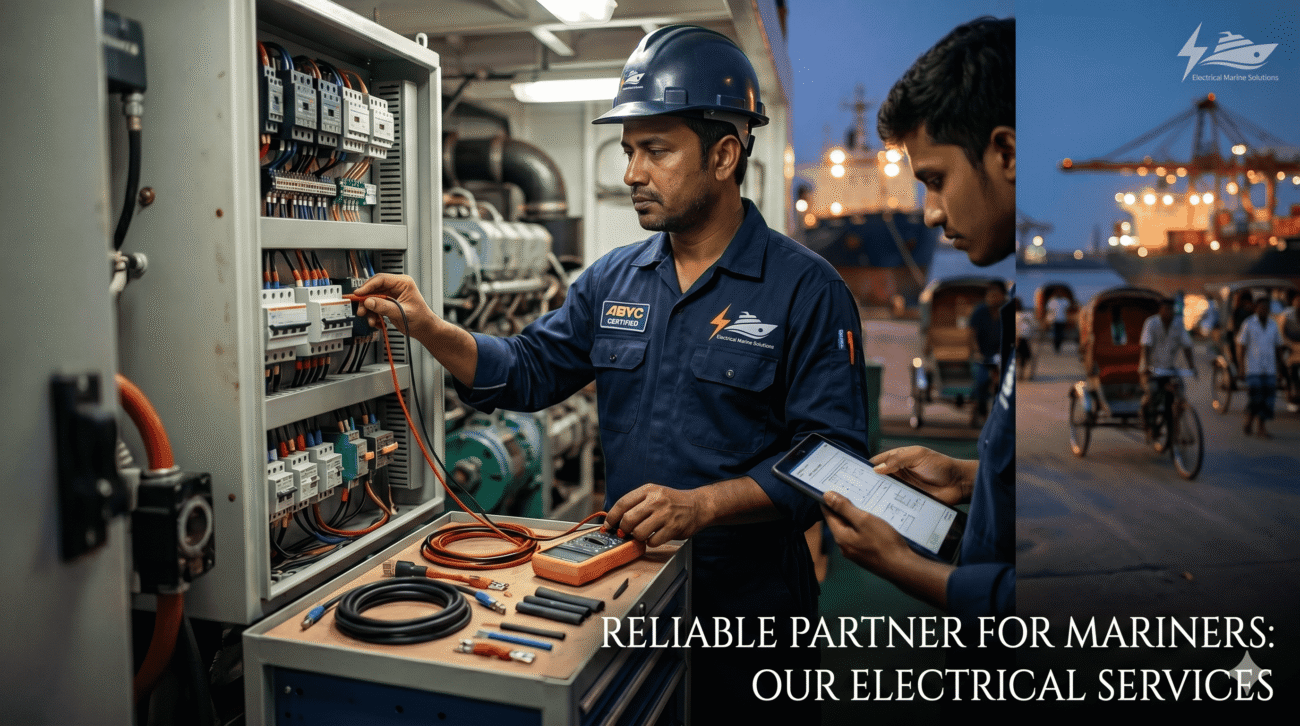
Reputable contractors provide a paper trail. This includes detailed schematics of the work they performed, warranties on parts and labor, and a list of long-term clients. If a contractor is hesitant to show you photos of their previous wiring panels (which should look neat, labeled, and organized), take it as a warning sign.
🚫 Critical Red Flags: When to Walk Away
Be wary of contractors who suggest using “automotive” or “residential” grade components. While they may look the same, marine-grade wire is tinned to prevent the “green rot” of corrosion. Other red flags include lack of insurance (extremely risky on high-value vessels) and quotes that are significantly lower than the market average—quality marine components are expensive for a reason.
Why Electrical Marine Solutions is the Trusted Choice in Poland and Abroad
At Electrical Marine Solutions, we don’t just fix wires; we engineer peace of mind. Our team is fully certified, globally mobile, and dedicated to the highest standards of marine safety. From Gdynia to the furthest international ports, we keep the world’s fleet powered.
❓ Frequently Asked Questions
Q: Why is marine-grade wire so much more expensive?
A: It is individually tinned to resist corrosion and features fine-strand construction to handle the constant vibration of boat engines without snapping.
Q: How often should I have an electrical audit?
A: For commercial vessels, a pre-season audit is mandatory. For yachts, every 12-24 months is recommended to check for terminal corrosion and battery health.
🏁 Conclusion
Your vessel’s electrical system is too important to leave to chance. By prioritizing certifications, marine-specific experience, and a proven track record, you ensure that your time at sea is spent focusing on the journey, not troubleshooting a blackout. Choose a partner who understands the sea as well as they understand the circuit.