
If you own a boat or plan to install a new outboard motor, knowing how to measure an outboard motor shaft length is essential. It may seem like a small detail, but the correct shaft length plays a major role in how your boat performs on the water.
An outboard motor with the wrong shaft length can cause several problems. You may notice poor handling, excessive spray, reduced fuel efficiency, or even damage to the engine over time. Many boat owners spend money on repairs or performance upgrades only to discover that the real issue is an improperly matched shaft length.
The good news is that measuring an outboard motor shaft length is simple. With a measuring tape and a few minutes of your time, you can determine whether your motor matches your boat’s transom height. This helps ensure better performance, improved safety, and a more enjoyable boating experience.
This guide is designed for boat owners, anglers, marine enthusiasts, and anyone shopping for a new or used outboard motor. Whether you’re maintaining an existing setup or preparing for a motor upgrade, understanding shaft length will help you make informed decisions.
What Is an Outboard Motor Shaft Length?
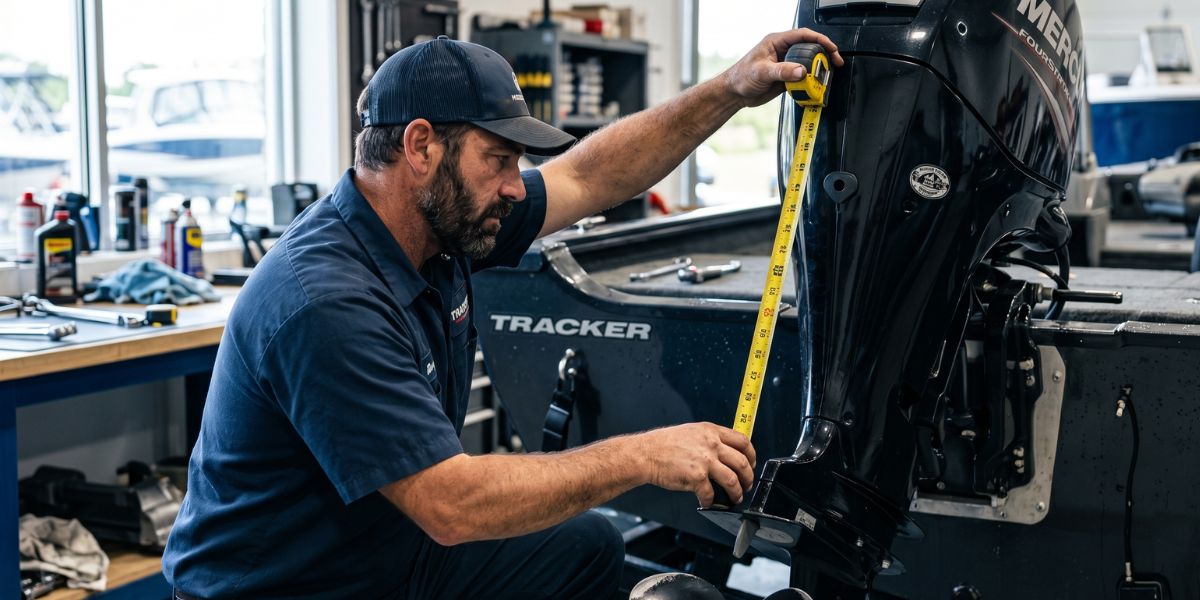
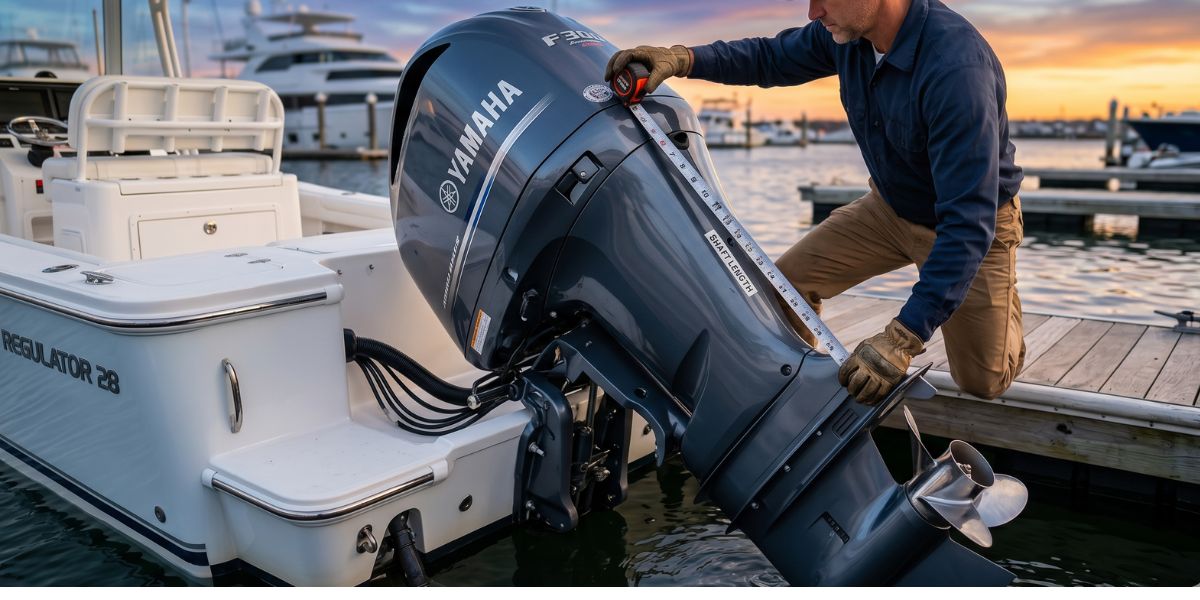
Outboard motor shaft length refers to the distance between the motor’s mounting bracket and the anti-ventilation plate located above the propeller. This measurement helps determine how deep the motor sits in the water when installed on a boat.
Many first-time boat owners confuse shaft length with the overall height of the outboard motor. However, these are not the same thing. The overall height includes the engine cowling, powerhead, and lower unit, while shaft length focuses only on the section that positions the propeller correctly beneath the boat.
Think of shaft length as the connection between your mercury outboard motors manufactured
boat and your motor’s performance. If the shaft is too short, the propeller may sit too close to the water’s surface. If it is too long, the lower unit may extend too deep into the water. Both situations can negatively affect performance.
boat and your motor’s performance. If the shaft is too short, the propeller may sit too close to the water’s surface. If it is too long, the lower unit may extend too deep into the water. Both situations can negatively affect performance.
A properly matched shaft length helps keep the anti-ventilation plate aligned with the bottom of the boat’s hull. This position allows the propeller to operate efficiently and deliver the best combination of speed, control, and fuel economy.
Matching the shaft length to your boat’s transom height is one of the most important steps when choosing an outboard motor. Manufacturers design boats and engines to work together within specific measurements. Following these recommendations helps ensure safe and reliable operation.
How Shaft Length Affects Boat Handling and Efficiency
The shaft length directly impacts how your boat behaves on the water. When the motor sits at the correct height, the propeller can generate thrust efficiently without creating excessive drag.
A properly sized shaft provides:
- Better acceleration
- Improved fuel economy
- More responsive steering
- Smoother operation in rough water
- Reduced engine strain
When the shaft length is incorrect, performance issues often appear quickly. You may experience unstable handling, loss of power, or increased fuel consumption. These problems can make boating less enjoyable and may lead to expensive repairs if ignored.
Why Measuring Outboard Motor Shaft Length Is Important
Accurate measurement is more than just a technical requirement. It directly affects the performance, safety, and lifespan of your boat and engine.
Prevents Cavitation and Propeller Ventilation
One of the most common issues caused by an incorrect shaft length is propeller ventilation. This happens when air is drawn into the propeller blades from the water’s surface.
When ventilation occurs, the engine may suddenly rev higher while the boat loses forward momentum. This reduces performance and can make handling unpredictable.
A correctly measured shaft length helps keep the propeller submerged at the proper depth, reducing the risk of ventilation and cavitation.
Improves Fuel Efficiency
Fuel costs are a significant part of boat ownership. An outboard motor that operates at the correct depth experiences less drag and works more efficiently.
When the shaft length matches the boat’s transom height, the engine does not need to work harder than necessary. This can help reduce fuel consumption and lower operating costs over time.
Enhances Boat Stability and Steering
A properly positioned motor provides better balance and control. Steering becomes more predictable, and the boat responds more effectively to driver inputs.
This is especially important when navigating rough water, making sharp turns, or operating at higher speeds.
Protects the Engine from Unnecessary Wear
An incorrectly mounted outboard motor often experiences additional stress. Excessive vibration, improper cooling water flow, and increased drag can contribute to premature wear on engine components.
Taking the time to measure shaft length correctly helps protect your investment and supports long-term reliability.
Ensures Compliance with Manufacturer Recommendations
Boat and engine manufacturers provide recommended shaft lengths for a reason. Their guidelines are based on extensive testing and engineering standards.
Using the correct shaft length helps maintain warranty compliance and ensures the motor operates as intended.
Tools You Need to Measure an Outboard Motor Shaft Length
One of the best things about measuring shaft length is that you do not need specialized marine equipment. Most boat owners already have everything required.
Measuring Tape
A quality measuring tape is the primary tool you’ll use. Choose one that provides clear markings and can measure accurately in inches.
Since most outboard shaft lengths are categorized using standard inch measurements, accuracy is important.
Straight Edge or Ruler
A straight edge helps ensure you are measuring from the correct reference points. It can also help verify alignment when checking the anti-ventilation plate position.
A ruler or level can work well for this purpose.
Notebook or Smartphone
Recording measurements helps prevent mistakes, especially when comparing multiple motors or shopping for a replacement engine.
Many boat owners use their smartphones to save measurements, take photos, and reference manufacturer specifications later.
Safety Precautions Before Measuring
Before measuring an outboard motor, always follow basic safety practices:
- Turn off the engine completely.
- Remove the ignition key.
- Ensure the motor is stable and secure.
- Keep hands away from the propeller.
- Use proper lifting techniques if repositioning the motor.
These simple precautions help prevent accidents and make the measuring process safer.
Understanding Standard Outboard Motor Shaft Lengths
Most outboard motors fall into four standard shaft length categories. Knowing these common sizes makes it easier to select the correct motor for your boat.
Short Shaft (15 Inches)
A short shaft outboard typically measures around 15 inches from the mounting bracket to the anti-ventilation plate.
These motors are commonly used on:
- Small fishing boats
- Jon boats
- Utility boats
- Lightweight aluminum boats
Short shafts work best on boats with transom heights close to 15 inches.
Long Shaft (20 Inches)
The 20-inch long shaft is one of the most common outboard sizes available today.
You’ll often find long shaft motors on:
- Bass boats
- Center console boats
- Recreational fishing boats
- Family runabouts
A 20-inch shaft generally pairs with a 20-inch transom height.
Extra-Long Shaft (25 Inches)
Extra-long shaft motors are designed for larger boats that require deeper engine placement.
Common applications include:
- Offshore fishing boats
- Larger pontoons
- Bay boats
- Heavy-duty recreational vessels
These motors typically match transoms around 25 inches high.
Ultra-Long Shaft (30 Inches)
Ultra-long shaft outboards are used in specialized marine applications where additional depth is necessary.
They are often found on:
- Offshore vessels
- Commercial boats
- Large center consoles
- Boats operating in rough-water conditions
The additional shaft length helps maintain propeller immersion even in challenging sea conditions.
Understanding these standard shaft lengths makes it easier to choose the right outboard motor and avoid costly installation mistakes. Before purchasing any motor, always verify your boat’s transom height and compare it with the manufacturer’s recommended shaft length.
How to Measure an Outboard Motor Shaft Length Step by Step
Measuring an outboard motor shaft length is one of the most important tasks when installing a new motor or replacing an existing one. The good news is that the process is straightforward and requires only a few basic tools. By taking accurate measurements, you can ensure is the 6.2 ford a good engine your motor sits at the proper height and delivers the performance your boat was designed to achieve.
Marine technicians and experienced boat owners often emphasize the importance of this measurement because even a few inches can make a noticeable difference in speed, fuel economy, handling, and overall engine performance.
Follow these simple steps to measure your outboard motor shaft length correctly.
Step 1: Place the Motor Upright
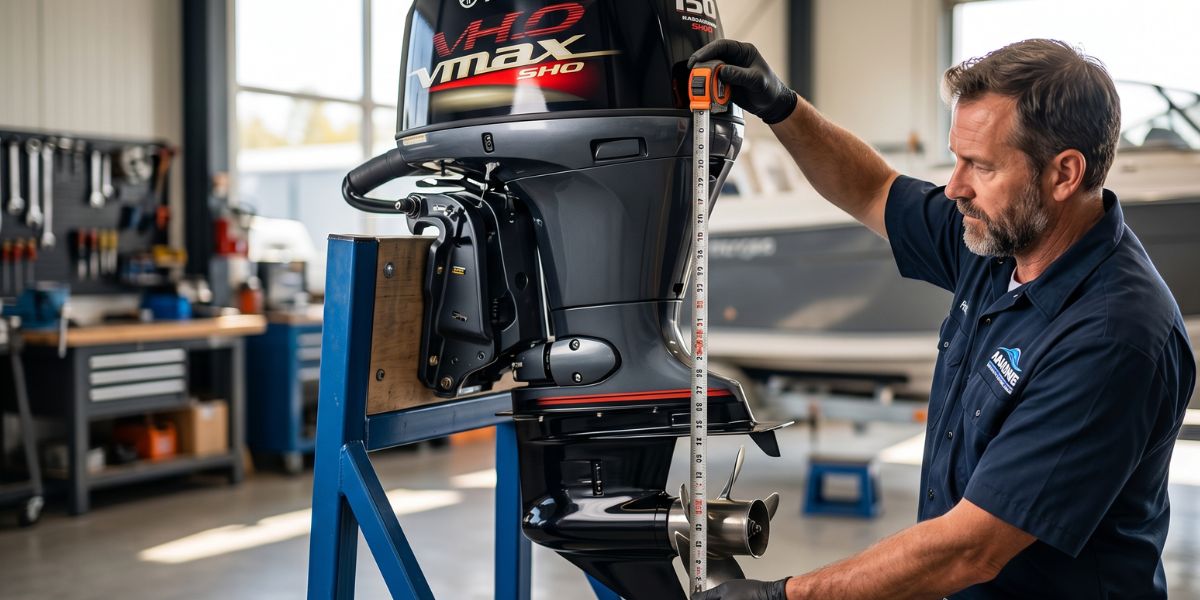
Before taking any measurements, position the outboard motor in a completely upright position.
The motor should be stable and vertical. If it is tilted forward or backward, your measurements may be inaccurate. Many boat owners prefer to leave the motor mounted on the boat during measurement, while others place it securely on a motor stand.
Check that the motor is not leaning to either side. A level position helps ensure you get a precise reading.
For safety, turn off the engine, remove the ignition key, and make sure the propeller area is clear before working around the motor.
Step 2: Locate the Mounting Bracket
The mounting bracket is the part of the outboard motor that attaches directly to the boat’s transom.
This bracket serves as the starting point for measuring shaft length. On most outboard motors, it is easy to identify because it includes the clamp assembly or mounting bolts used to secure the motor.
Look for the flat surface where the motor rests against the transom. This is typically where your measurement will begin.
Taking measurements from any other location can result in incorrect shaft length calculations.
Step 3: Find the Anti-Ventilation Plate
The anti-ventilation plate is located just above the propeller.
Sometimes called the cavitation plate, this horizontal metal plate helps direct water flow around the lower unit and propeller. It plays an important role in maintaining efficient performance while reducing ventilation.
The anti-ventilation plate is usually easy to spot because it extends outward on both sides of the lower unit.
When measuring shaft length, the distance between the mounting bracket and this plate is what matters.
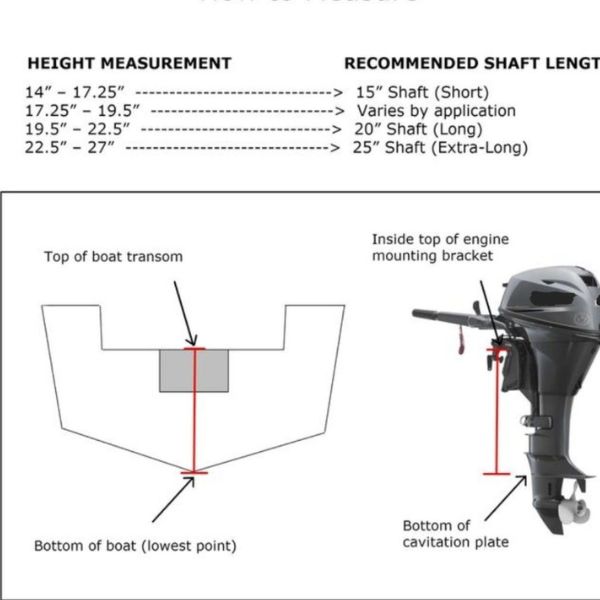
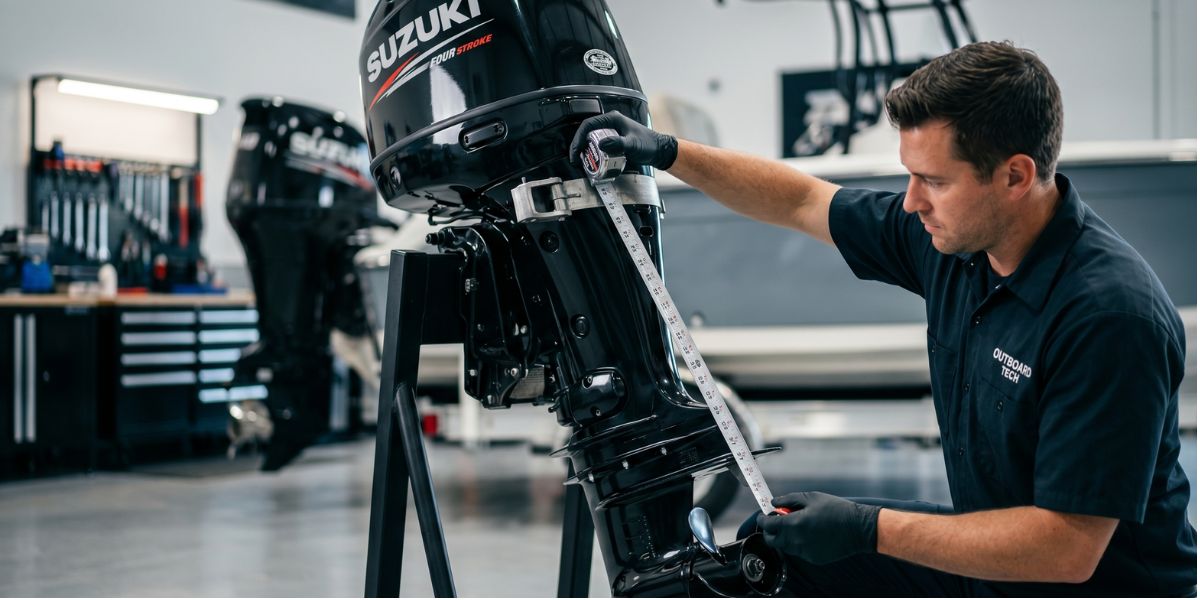
Step 4: Measure the Distance
Now it’s time to take the actual measurement.
Using a measuring tape, measure the vertical distance from the inside top edge of the mounting bracket down to the anti-ventilation plate.
Keep the tape measure straight and avoid measuring at an angle. Even small measurement errors can affect the final result.
Record the measurement carefully. Many boat owners use a smartphone or notebook to keep track of measurements for future reference.
Step 5: Round to the Nearest Standard Size
Once you have your measurement, compare it to standard outboard shaft lengths.
Most outboard motors fall into one of four categories:
- 15-inch Short Shaft
- 20-inch Long Shaft
- 25-inch Extra-Long Shaft
- 30-inch Ultra-Long Shaft
For example, if your measurement is approximately 20 inches, you have a long shaft outboard.
Manufacturers design their motors around these standard sizes, so matching your measurement to the nearest category helps ensure compatibility with your boat.
Accurate measurements reduce the risk of installation problems and help maximize engine efficiency.
How to Measure Boat Transom Height
Measuring the outboard motor is only part of the process. You must also measure your boat’s transom height.
A motor and boat should work together as a system. Even the correct motor shaft length can perform poorly if it does not match the transom height.
What Is Transom Height?
The transom is the flat vertical section located at the rear of the boat where the outboard motor mounts.
Transom height refers to the distance from the top center of the transom down to the bottom of the hull.
This measurement determines which shaft length your boat requires.
Most boat manufacturers specify recommended transom heights and shaft lengths in their owner’s manuals. However, measuring it yourself provides extra confidence when purchasing a new motor.
How to Measure Transom Height
The process is simple.
Start by positioning the boat on a level surface.
Using a measuring tape, measure from the top center of the transom straight down to the lowest point of the hull where the motor will sit.
Avoid measuring from the corners because some boats have angled or stepped transoms.
Take several measurements if needed and use the most accurate reading.
Matching Transom Height to Shaft Length
The goal is to align the anti-ventilation plate with the bottom of the hull.
When the motor is mounted correctly, the plate should sit approximately level with the hull bottom.
This position allows the propeller to operate efficiently while minimizing drag and ventilation.
If the shaft is too short, the propeller may rise too close to the water surface.
If the shaft is too long, the lower unit may sit too deep in the water.
Either situation can reduce performance and fuel economy.
Recommended Transom-to-Shaft Combinations
Most boat manufacturers follow standard sizing guidelines.
A 15-inch transom typically requires a 15-inch shaft.
A 20-inch transom usually matches a 20-inch shaft.
Larger boats often require 25-inch or 30-inch shafts.
Matching these measurements correctly helps ensure the best boating experience.
Outboard Shaft Length Chart
The following chart provides a quick reference for matching transom height to outboard shaft length.
| Transom Height | Recommended Shaft Length |
| 15 inches | Short Shaft (15″) |
| 20 inches | Long Shaft (20″) |
| 25 inches | Extra-Long Shaft (25″) |
| 30 inches | Ultra-Long Shaft (30″) |
This chart serves as a general guide. Always verify measurements and review manufacturer recommendations before purchasing or installing an outboard motor.
Some specialized boats may require unique configurations depending on their design and intended use.
Common Mistakes When Measuring Outboard Motor Shaft Length
Even though measuring shaft length is relatively simple, mistakes happen frequently. These errors can lead to incorrect motor selection and poor performance on the water.
Understanding the most common mistakes can help you avoid costly problems.
Measuring From the Wrong Starting Point
One of the biggest mistakes is measuring from an incorrect location.
Some boat owners mistakenly measure from the engine cowling or lower unit instead of the mounting bracket.
The correct measurement begins at the mounting bracket and ends at the anti-ventilation plate.
Using any other reference point can produce inaccurate results.
Confusing Overall Motor Height With Shaft Length
The overall height of an outboard motor includes many components that are not part of the shaft length measurement.
Many first-time buyers assume a taller motor automatically means a longer shaft.
This assumption can lead to purchasing the wrong outboard model.
Always focus on the mounting bracket-to-anti-ventilation plate distance.
Ignoring Transom Height Measurements
Measuring only the motor is another common error.
The transom height must also be measured to confirm compatibility.
Without this comparison, it is impossible to know whether the motor will sit at the proper depth once installed.
Both measurements are equally important.
Not Keeping the Motor Vertical During Measurement
A tilted motor creates inaccurate readings.
Even a small angle can alter the measurement enough to place the motor in the wrong shaft-length category.
Always position the motor upright and stable before measuring.
Taking a few extra moments to verify alignment can save significant time and expense later.
Using Inaccurate Measuring Tools
Old, damaged, or difficult-to-read measuring tapes can lead to mistakes.
Always use a reliable tape measure with clear markings.
Double-check your measurements and repeat the process if necessary.
Experienced marine technicians often measure twice before making purchasing decisions.
A few extra minutes spent verifying dimensions can prevent costly installation errors and ensure your outboard motor performs exactly as intended.
Signs Your Outboard Motor Shaft Length Is Incorrect
A correctly sized outboard motor shaft is essential for smooth and efficient boating. When the shaft length does not match the boat’s transom height, performance issues usually appear quickly. Many boat owners assume engine problems are related to fuel or maintenance, but in reality, incorrect shaft length is often the hidden cause.
Recognizing the warning signs early can help prevent damage, improve safety, and reduce long-term repair costs. Below are the most common indicators that your outboard motor shaft length may not be correctly matched.
Excessive Spray Behind the Boat
One of the clearest signs of incorrect shaft length is excessive water spray coming from behind the boat.
When the motor is mounted too high or too low, the propeller does not sit at the ideal depth. This imbalance causes water to splash upward instead of flowing smoothly behind the boat.
Excess spray is not just a minor inconvenience. It often indicates that the propeller is struggling to maintain proper grip in the water, which reduces efficiency and control.
Poor Acceleration
If your boat feels slow to respond when you increase throttle, the shaft length may not be correct.
A motor that is not positioned at the right depth cannot transfer power efficiently to the water. As a result, acceleration becomes weak or inconsistent.
This issue is especially noticeable when carrying passengers or heavy gear. The engine may rev normally, but the boat does not gain speed as expected.
Propeller Ventilation
Propeller ventilation occurs when air is drawn into the propeller blades instead of water. This is a common symptom of incorrect shaft length.
When ventilation happens, the engine speed increases suddenly, but forward movement decreases. The boat may feel like it is slipping or losing traction in the water.
This problem not only affects performance but can also lead to increased engine strain over time.
Reduced Fuel Economy
Fuel efficiency is directly linked to proper engine positioning.
If the shaft length is incorrect, the motor must work harder to push the boat forward. This leads to higher fuel consumption, even during normal cruising speeds.
Many boat owners notice they are refueling more often without changing their boating habits. In many cases, adjusting shaft length or correcting motor height can significantly improve fuel economy.
Difficulty Steering at Higher Speeds
Steering problems often become more noticeable at higher speeds when the shaft length is incorrect.
The boat may feel unstable, or the steering wheel may require constant correction. In some cases, the boat may drift or pull to one side.
This lack of control is not only frustrating but can also create safety risks, especially in rough water or busy boating areas.
Can You Use a Different Shaft Length Than Recommended?
While it is always best to follow manufacturer recommendations, some boat owners wonder if using a different shaft length is possible. In certain situations, minor adjustments may work, but they usually come with trade-offs.
Situations Where Adjustments May Work
In limited cases, slight variations in shaft length can be adjusted using mounting height changes or transom brackets.
For example, some boats allow small modifications in engine position to improve alignment. However, these adjustments have limits and cannot fully compensate for a significantly incorrect shaft length.
Performance Trade-Offs
Even if a different shaft length appears to work, performance may still be affected.
A shorter shaft might improve speed in calm water but can struggle in rough conditions. A longer shaft may improve stability but can reduce efficiency and increase drag.
These trade-offs should be carefully considered before making any changes.
Risks of Using the Wrong Shaft Length
Using an incorrect shaft length for extended periods can lead to serious issues, including:
- Increased engine wear
- Poor fuel economy
- Reduced handling control
- Propeller damage
- Water intake problems
Over time, these issues can become expensive to repair and may shorten the lifespan of the motor.
Manufacturer Recommendations
Boat and engine manufacturers design shaft lengths based on extensive testing. Their recommendations ensure optimal performance, safety, and durability.
Ignoring these guidelines may also affect warranty coverage. For this reason, it is always best to match the shaft length to the boat’s transom height as closely as possible.
Tips for Choosing the Right Outboard Motor Shaft Length
Choosing the correct shaft length is not complicated, but it does require careful attention to detail. A few simple steps can help ensure you make the right decision.
Measure Twice Before Buying
Accuracy is critical when selecting an outboard motor.
Always measure both the motor shaft and the boat’s transom height more than once. Small errors can lead to incorrect sizing and performance problems.
Taking extra time during measurement helps avoid costly mistakes.
Consult the Boat Owner’s Manual
Most boats include manufacturer guidelines for recommended shaft lengths.
These specifications are based on the boat’s design and intended use. Reviewing the manual can provide valuable confirmation before making a purchase.
If the manual is unavailable, contact the manufacturer or dealer for guidance.
Consider Boat Usage and Water Conditions
Different boating environments may influence your choice of shaft length.
For example, boats used in rough water or offshore conditions may benefit from slightly longer shafts for improved stability. On the other hand, boats used in calm lakes may perform well with standard sizing.
Understanding your typical boating conditions helps ensure better long-term performance.
Verify Manufacturer Specifications
Outboard motor manufacturers provide detailed specifications for each model.
Always compare your measurements with these specifications before purchasing a motor. This step ensures compatibility and helps prevent installation issues.
Seek Professional Advice When Unsure
If you are uncertain about your measurements or selection, it is wise to consult a marine technician.
Professionals have experience working with different boat types and can provide accurate recommendations based on real-world conditions.
Conclusion
Measuring and selecting the correct outboard motor shaft length is one of the most important steps in ensuring safe and efficient boating. When the shaft length matches the boat’s transom height, the engine performs more smoothly, uses fuel more efficiently, and delivers better overall control.
The process involves simple steps: measuring the motor correctly, checking the transom height, and comparing results with standard shaft sizes. While it may seem like a small detail, it has a major impact on performance and safety.
Accurate measurements help prevent common issues such as ventilation, poor acceleration, and steering difficulties. They also extend the life of your engine and improve fuel economy over time.
Before purchasing or installing an outboard motor, always double-check your measurements and follow manufacturer guidelines. A few extra minutes spent verifying details can lead to years of reliable and enjoyable boating.
FAFs
How do I know if my outboard motor is a short or long shaft?
Measure from the mounting bracket to the anti-ventilation plate. Around 15 inches is a short shaft, while around 20 inches is a long shaft.
What happens if my outboard shaft is too short?
The propeller may ventilate, reducing performance and increasing fuel consumption.
What happens if my outboard shaft is too long?
The lower unit sits too deep in the water, creating extra drag and reducing efficiency.
Is shaft length measured from the propeller?
No. Shaft length is measured from the mounting bracket to the anti-ventilation plate.
Can I extend an outboard motor shaft?
Some models can be modified using conversion kits, but manufacturer approval is recommended.
What is the most common outboard shaft length?
The 20-inch long shaft is one of the most common sizes for recreational boats.
Should the anti-ventilation plate be level with the bottom of the boat?
Yes, in most cases it should be approximately level with the boat’s hull bottom for optimal performance.
How often should I check my shaft length measurements?
Verify measurements whenever changing boats, replacing motors, or purchasing a used outboard.