
If you have ever wondered how a brake servo works, you are not alone. It is one of those car parts many drivers have heard of, but few fully understand. Yet it plays a huge role in making your car easy and safe to stop.
In simple terms, a brake servo helps multiply the force you apply to the brake pedal. That means you do not have to push as hard with your foot to slow the car down. Without it, braking would feel much heavier and far more tiring, especially in traffic or during emergency stops.
You may also hear the brake servo called a brake booster. In most cases, these terms mean the same thing. Whatever name you use, the job is simple: make braking easier by assisting the pressure you apply to the pedal.
In this guide, we will explain what a brake servo is, how a brake servo works step by step, how it connects to the rest of the braking system, and the common signs that something might be wrong. We will also look at real-world examples to make the whole system easier to picture.
What Is a Brake Servo?
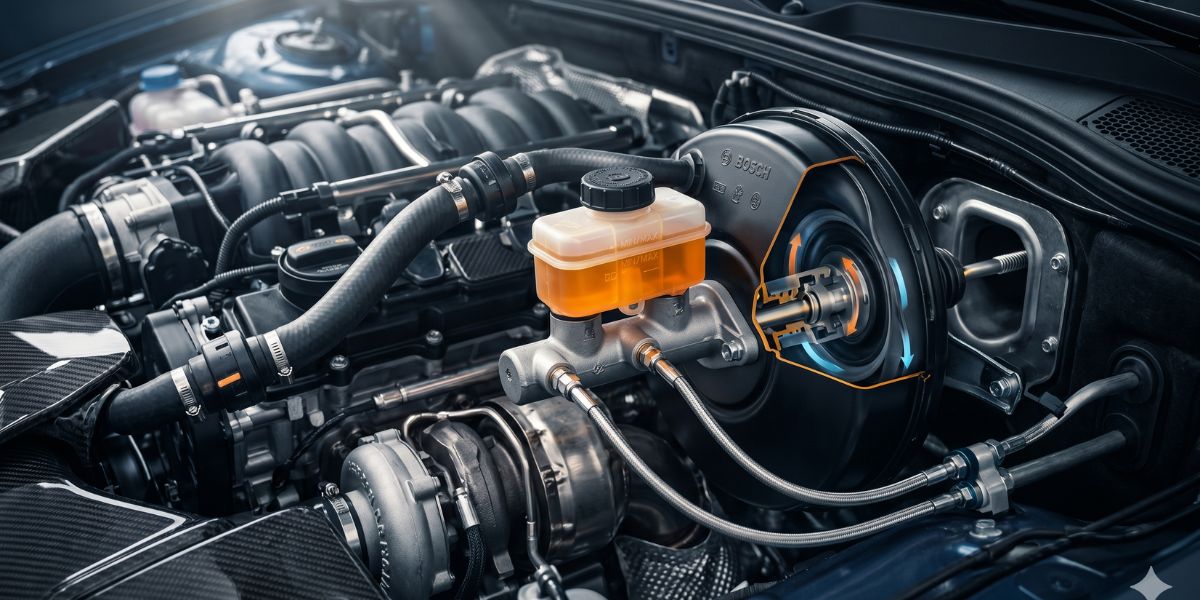
A brake servo is a device fitted between the brake pedal and the master cylinder. Its purpose is to reduce the effort needed to operate the brakes.
Think of it as a helper. When you press the brake pedal, the servo adds extra force to your input before that force reaches the master cylinder. The master cylinder then converts that force into hydraulic pressure, which applies the brakes at the wheels.
So the servo does not stop the car by itself. Instead, it supports your braking effort.
Here is a simple way to picture it:
- Your foot starts the process
- The brake servo boosts the force
- The master cylinder turns that force into hydraulic pressure
- The brakes at the wheels slow the car down
That is why the brake servo is such an important part of the braking system. It makes modern driving feel comfortable and controlled.
Why a Brake Servo Is Important in a Car
Imagine having to press the brake pedal with full leg strength every time you wanted to slow down. That would get tiring quickly. It would also make emergency braking much harder.
This is where the brake servo makes a big difference.
It reduces pedal effort
The biggest benefit is that it lowers the amount of force needed from the driver. A light press on the brake pedal can still create strong braking force.
It improves safety
In an emergency, every second matters. A brake servo helps drivers apply strong braking force more quickly and with less physical effort.
It gives better control
Because the pedal is easier to use, braking often feels smoother and more progressive. That helps with gentle stops in traffic and controlled braking at higher speeds.
It reduces fatigue
If you drive often in stop-start traffic, you are using the brakes all the time. The servo makes that less tiring over long journeys or daily commutes.
For example, if you are creeping through city traffic and pressing the brake every few seconds, a functioning brake servo keeps the pedal light and manageable. Without it, your leg would work much harder all day.
Main Parts of a Brake Servo
To understand how a brake servo works, it helps to know the main components inside it.
1. Housing
The housing is the outer shell that contains the internal parts of the servo. It is usually round and mounted behind the master cylinder.
2. Diaphragm
The diaphragm is a flexible internal membrane. It moves when there is a pressure difference inside the servo, and this movement helps create the extra assist.
3. Pushrod
The pushrod transfers movement from the brake pedal into the servo and from the servo into the master cylinder.
4. Control valve
This valve controls airflow and vacuum inside the servo. It helps create the pressure difference that allows the diaphragm to move.
5. Return spring
The return spring helps move internal parts back into their resting position when you release the brake pedal.
6. Vacuum chamber
The servo has chambers inside it. These chambers work with vacuum pressure to create brake assistance.
7. Check valve
The one-way check valve helps maintain vacuum inside the system. It prevents vacuum from escaping when engine conditions change.
8. Vacuum hose or vacuum supply
This provides the vacuum needed for the servo to operate. In many vehicles, the vacuum comes from the engine intake manifold. In others, it may come from a vacuum pump.
Each part has a simple role, but together they make the brake pedal much easier to use.
How a Brake Servo Works Step by Step
Now let’s get to the main question: how does a brake servo work?
The easiest way to explain it is step by step.
Step 1: The engine creates vacuum
In many vehicles, the engine creates vacuum as it runs. This vacuum is sent to the brake servo through a hose.
Some cars, especially certain diesel or turbocharged models, use a vacuum pump because engine vacuum alone may not be enough.
Step 2: Vacuum is stored in the servo
When the system is working normally, vacuum is present in both sides of the servo chamber. At this point, there is no pressure difference, so the diaphragm stays still.
Step 3: You press the brake pedal
As soon as you press the pedal, a control valve inside the brake servo opens and changes how pressure is managed inside the unit.
Step 4: Air enters one side of the servo
The valve allows atmospheric air into one side of the chamber while the other side remains under vacuum.
This creates a pressure difference.
Step 5: The diaphragm moves
Because one side has vacuum and the other has higher air pressure, the diaphragm moves. That movement adds force to the pushrod.
Step 6: Extra force is sent to the master cylinder
The servo uses that diaphragm movement to help push on the master cylinder. This means your braking input is amplified.
So instead of relying only on your foot pressure, the system adds assistance.
Step 7: The master cylinder creates hydraulic pressure
The master cylinder then converts this increased mechanical force into hydraulic pressure. That hydraulic pressure travels through brake lines to the wheel brakes.
Step 8: You release the brake pedal
When you lift your foot off the brake, the valve resets, pressure equalizes, and the return spring helps move the internal parts back into place.
The servo is then ready for the next brake application.
A simple real-world example
Picture opening a heavy door with and without help.
Without a brake servo, you would have to push the whole weight of the door yourself.
With a brake servo, it is like someone is on the other side helping you push at the same time. You still start the action, but the extra support makes the job much easier.
That is exactly how brake assistance feels in practice.
The Role of Vacuum in Brake Servo Operation
Vacuum is the key to how most traditional brake servos work.
The servo depends on the difference between vacuum pressure and normal air pressure. That difference is what moves the diaphragm and creates extra braking force.
Why vacuum matters
If there is no vacuum, the servo cannot provide assistance. The brakes may still work, but the pedal will feel heavy and much harder to press.
Where vacuum comes from
In petrol engines, vacuum often comes from the intake manifold.
In diesel vehicles or cars with certain engine designs, a separate vacuum pump may be used.
Why the check valve matters
The check valve helps keep some vacuum stored inside the servo, even if the engine is switched off for a short time. That is why you can often still get one or two assisted brake presses after turning the engine off.
Example of vacuum loss
Let’s say a vacuum hose cracks. The brake servo may stop receiving enough vacuum. When that happens, the driver may notice a stiff pedal, reduced assistance, or even a hissing sound from escaping air.
So when people ask how a brake servo works, the short answer is often this: it uses vacuum and pressure difference to multiply the force you apply to the brake pedal.
Brake Servo vs Master Cylinder: What’s the Difference?
These two parts work closely together, so they are often confused. But they do very different jobs.
The brake servo
The brake servo assists your pedal effort. It makes braking easier by adding extra force.
The master cylinder
The master cylinder takes that force and converts it into hydraulic pressure, which operates the brakes.
A simple comparison
- Brake servo: boosts pedal force
- Master cylinder: creates hydraulic pressure
- Brake lines and calipers/drums: apply braking force at the wheels
Why the distinction matters
A fault in the servo often causes a hard pedal.
A fault in the master cylinder may cause a spongy pedal, poor pressure retention, or fluid-related braking problems.
For example, if you press the brake and the pedal feels very hard but the car still stops, the servo or vacuum system may be the issue. If the pedal sinks slowly or feels soft, the master cylinder may be more likely to blame.
What Happens If the Brake Servo Fails?
A failed brake servo does not always mean total brake failure, but it does mean braking becomes much harder.
That is because the hydraulic brakes can still work, but you lose the assistance that makes them easy to operate.
Common effects of brake servo failure
- The brake pedal feels stiff or hard
- You need much more force to stop the car
- Emergency braking becomes harder
- Braking may feel less responsive
- Driving becomes more tiring and less safe
Real-world example
Imagine approaching a roundabout and needing to slow down quickly. In a healthy car, a moderate press on the brake pedal gives a strong response. In a car with a failed brake servo, you may have to stamp much harder on the pedal to get the same result.
That extra effort can catch drivers off guard, especially if the problem develops suddenly.
Common Signs of a Bad Brake Servo
A failing brake servo often gives warning signs before it completely stops assisting.
Here are some of the most common symptoms.
Hard brake pedal
This is the biggest clue. If the brake pedal suddenly feels much harder than normal, the servo may not be working properly.
Hissing noise
A hissing sound when pressing the brake pedal can point to an air leak in the servo or vacuum line.
Increased braking effort
If you feel like you have to press the pedal much harder to stop, that may mean the assistance has been reduced.
Engine idle changes
In some cases, a faulty servo can create a vacuum leak that affects engine idle. The engine may run rough or change speed when you press the brake.
Reduced confidence during braking
The car may still stop, but the braking feel may seem less smooth, less responsive, or more tiring.
Warning lights in some vehicles
Depending on the car, related warning lights may appear if the system detects a problem elsewhere in the brake assist setup.
These symptoms can sometimes overlap with vacuum hose issues, check valve faults, or master cylinder problems, so proper diagnosis matters.
Common Causes of Brake Servo Problems
Several faults can stop a brake servo from working as it should.
Vacuum leaks
A split hose, loose connection, or leaking seal can reduce the vacuum supply.
Damaged diaphragm
The diaphragm inside the servo can wear out or tear over time, reducing its ability to create assistance.
Faulty check valve
If the check valve fails, the system may not hold vacuum properly.
Vacuum pump problems
If the car uses a vacuum pump and that pump fails, the servo may lose assist.
Internal wear
Like many car parts, brake servos can wear down with age. Seals, springs, and moving parts can all degrade over time.
Contamination or moisture
Dirt, fluid leaks, or corrosion can affect internal parts and reduce performance.
For example, an older vehicle with cracked rubber hoses may show servo symptoms even though the servo itself is not the main fault. That is why technicians often inspect the entire vacuum assist system.
How to Test Whether a Brake Servo Is Working
There is a simple test often used to check whether a brake servo is providing assistance.
Basic brake servo test
- Turn the engine off.
- Press the brake pedal several times to remove stored vacuum.
- Hold the brake pedal down.
- Start the engine.
- Watch and feel for a slight drop in the pedal.
What the result means
If the brake servo is working, the pedal should move down slightly as vacuum builds and assistance returns.
If the pedal does not move at all, that may suggest a problem with the servo, vacuum supply, hose, valve, or pump.
This is a helpful basic check, but it is not a full diagnosis. If the pedal feels hard or braking performance changes, it is best to have the system inspected properly.
Can You Drive With a Faulty Brake Servo?
Technically, a car with a faulty brake servo may still be able to stop. But that does not mean it is safe to keep driving.
Why it is risky
Without brake assistance, you need much more force to slow the vehicle. That can be especially dangerous in panic-stop situations.
When it becomes a serious issue
- Heavy traffic
- High-speed roads
- Wet or slippery conditions
- Drivers who are not expecting the pedal to feel hard
Practical advice
If you suspect brake servo failure, get the car checked as soon as possible. Braking problems should never be ignored or delayed.
Even if the car seems “mostly fine,” reduced assistance can make a real difference when you need maximum braking in a hurry.
How Brake Servos Differ in Modern Vehicles
Most people think of the traditional vacuum brake servo, but modern vehicles may use different systems.
Vacuum brake servos
These are still very common. They use vacuum and air pressure difference to provide assistance.
Hydraulic brake boosters
Some vehicles use hydraulic pressure instead of vacuum to assist braking.
Electronic brake assist systems
Newer vehicles may include advanced electronic systems that work alongside or instead of traditional designs.
Brake-by-wire systems
Some modern cars use electronically controlled braking systems that reduce the role of purely mechanical assistance.
Even when the technology changes, the main purpose stays the same: reduce the effort needed from the driver and improve braking control.
Conclusion
Understanding how a brake servo works makes it easier to appreciate how important it is to everyday driving. It may sit quietly behind the scenes, but it has a major impact on comfort, control, and safety.
To sum it up, a brake servo works by using vacuum and pressure difference to amplify the force you apply to the brake pedal. That extra force is then passed to the master cylinder, which creates the hydraulic pressure needed to slow the car.
Without a working brake servo, the brakes may still function, but the pedal will feel much heavier and stopping quickly will take more effort.
So if you notice a hard brake pedal, a hissing sound, or reduced brake assistance, do not ignore it. Getting the system checked early can help prevent bigger problems and keep your car safe to drive.
FAQs
What does a brake servo do?
A brake servo helps reduce the amount of force needed to press the brake pedal. It boosts your pedal input before that force reaches the master cylinder, making braking easier and more effective.
Is a brake servo the same as a brake booster?
Yes, in most cases they are the same part. “Brake servo” is one term, while “brake booster” is another common name used in different regions.
Can a car stop without a brake servo?
Yes, the car can usually still stop, but it will require much more pressure on the brake pedal. That makes the vehicle harder and less safe to drive, especially in emergencies.
What causes a brake servo to fail?
Common causes include vacuum leaks, a damaged diaphragm, cracked hoses, a faulty check valve, internal wear, or vacuum pump problems.
What does a failing brake servo sound like?
A failing brake servo may make a hissing noise, especially when you press the brake pedal. This often points to an air or vacuum leak.
How do I know if my brake servo or master cylinder is bad?
A hard brake pedal often suggests a servo or vacuum assist issue. A soft or sinking pedal may be more related to the master cylinder. Because symptoms can overlap, a proper inspection is important.
How long does a brake servo last?
A brake servo can last many years, often for a large part of the vehicle’s life. Its lifespan depends on mileage, age, driving conditions, and the condition of related vacuum components.
Is brake servo failure dangerous?
Yes, it can be dangerous because it reduces braking assistance and makes the pedal much harder to press. That can affect your ability to stop quickly and safely.