
Picture your first time sitting in the driver’s seat. You look down and see two pedals — or maybe three. Your instructor tells you to press the brake, and for a split second you freeze. Which one is it? You are not alone. This is one of the most common questions new drivers type into Google, and it deserves a clear, honest answer.
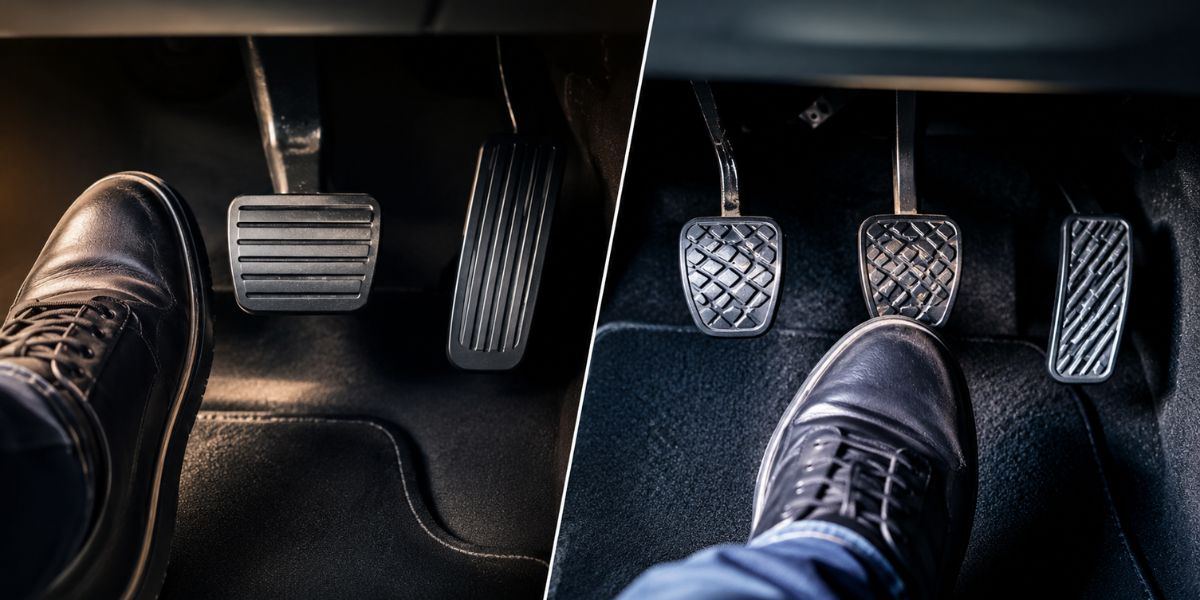
Here it is: in a two-pedal automatic car, the brake is the left pedal. In a three-pedal manual car, the brake is the middle pedal — sitting between the clutch on the left and the accelerator on the right.
But knowing which pedal is the brake is just the beginning. To drive safely, you also need to understand what the brake actually does, why there are different types of brakes in a car, and how to use them correctly in different situations.
That is exactly what this guide covers. I have been teaching people about cars for years, and the question “which is the brake in a car” comes up more than almost anything else. By the end of this article, you will understand your braking system well enough to drive with confidence — and to spot a problem before it becomes dangerous.
Which Pedal Is the Brake? Pedal Layout Explained
Before anything else, you need to know where the brake pedal lives.
Automatic cars — two pedals
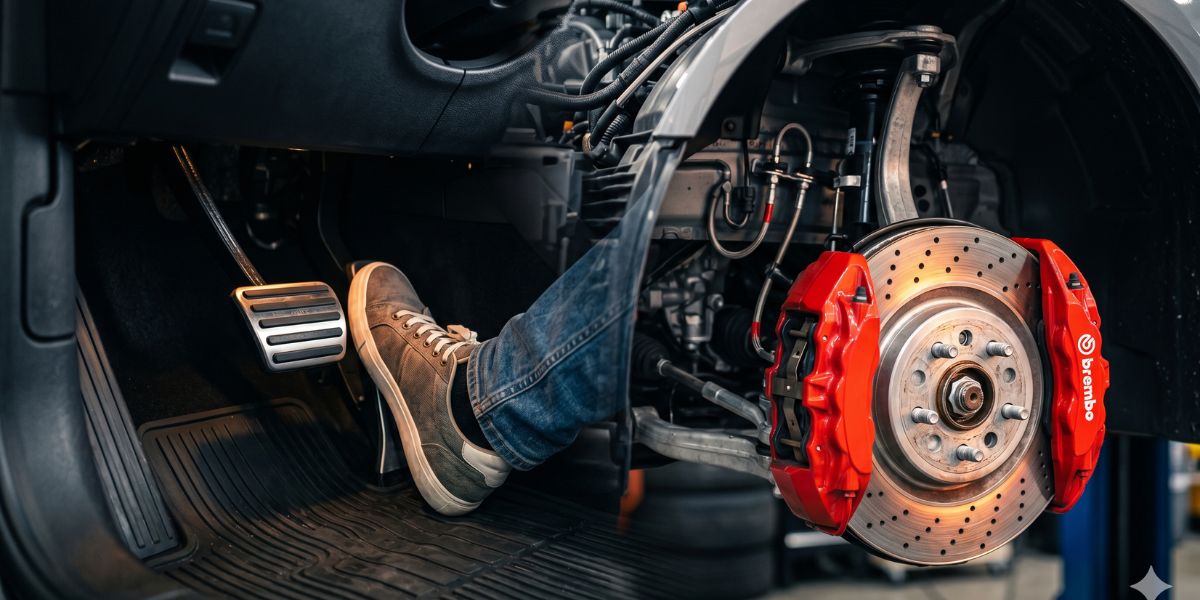
In an automatic car, there are two pedals. The car handles gear changes for you, so there is no clutch pedal. What you have is:
- The brake on the left
- The accelerator on the right
The brake pedal is always wider and sits slightly higher than the accelerator. That is not a coincidence. The difference in size and height is a deliberate safety feature. If you reach down in the dark or under stress, your foot should naturally find the right pedal by feel.
The brake is always operated with your right foot. Always. This is standard driving technique in every country that drives on the right or left side of the road. Right-foot braking means your foot has to lift completely off the accelerator before it reaches the brake — an automatic check that prevents you from pressing both at once.
Manual cars — three pedals
In a manual car, there are three pedals. From left to right they are:
- Clutch — disconnects the engine from the gearbox so you can change gear
- Brake — slows and stops the car
- Accelerator — increases engine speed
The brake is always in the middle. If you are ever unsure in a manual car, the middle pedal is always the brake. The clutch is always on the far left.
A quick way to tell them apart at a glance
The brake pedal is wider than the accelerator. It is also Brake Systems for Crate Engines positioned a little higher off the floor. The clutch pedal (in a manual) is roughly the same size as the brake but sits on the far left with a clear gap between it and the brake.
Once you have driven for a few weeks, finding the brake becomes completely automatic — you will not think about it. But in those early sessions, these physical cues help.
What Does the Brake Pedal Actually Do?
Pressing a pedal and stopping a two-tonne vehicle sounds like magic. It is not — but the engineering behind it is genuinely impressive.
The hydraulic system
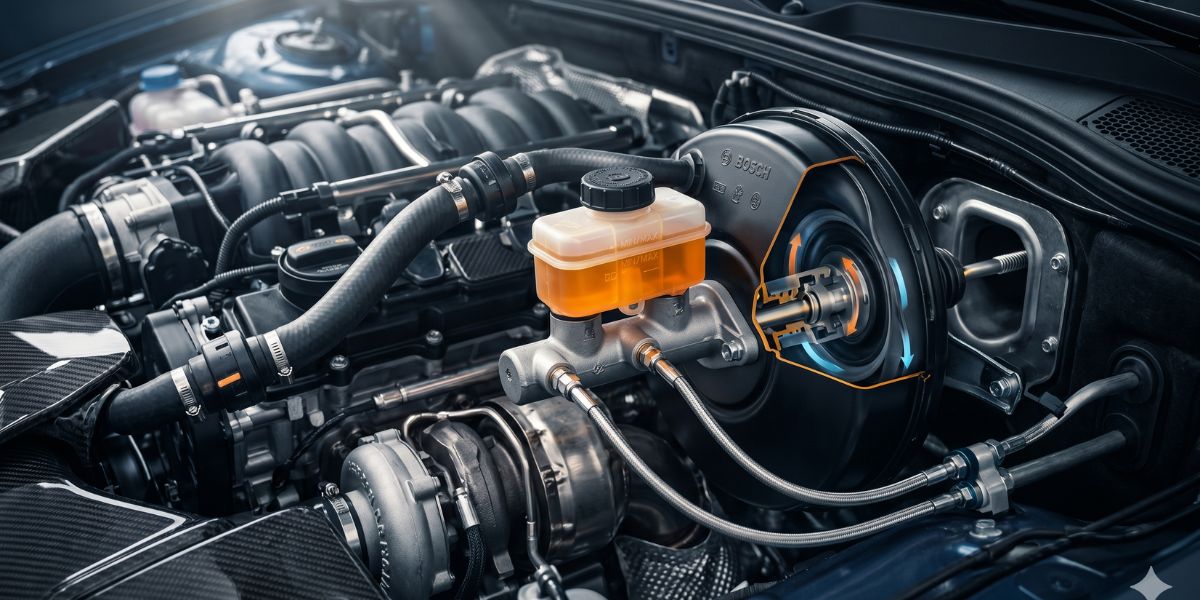
Car brakes work on hydraulic pressure. When you press the brake pedal, you are not directly pushing on the brakes themselves. You are pushing a piston inside a device called the master cylinder, which sits in your engine bay and is filled with brake fluid.
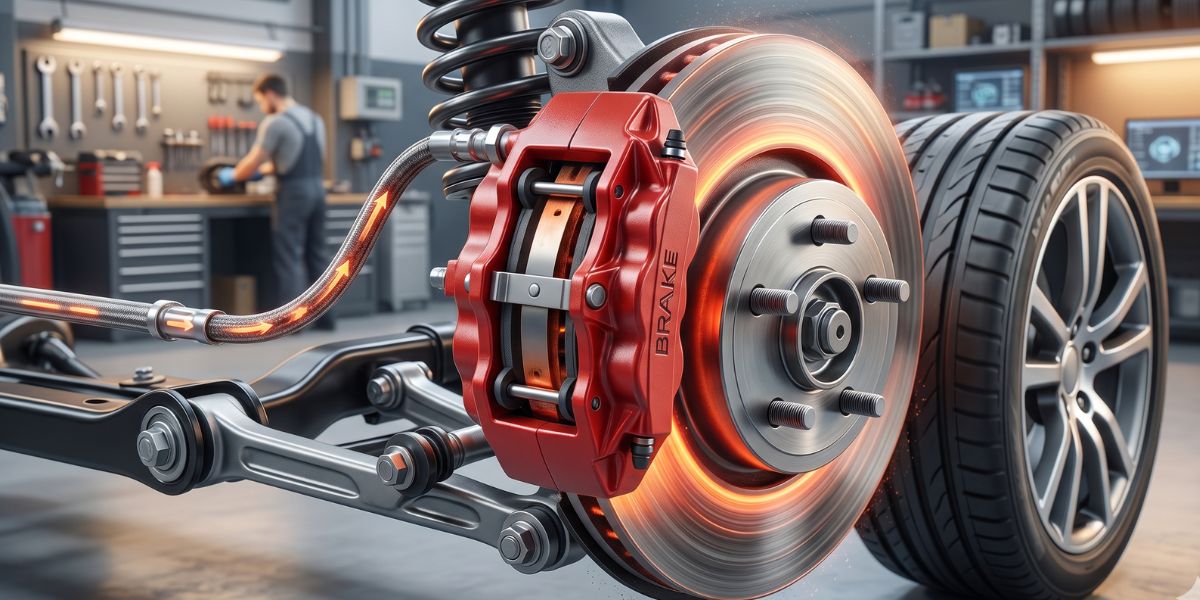
That push sends pressurised fluid through a network of brake lines running to each wheel. At each wheel, that fluid pressure pushes a piston inside a brake caliper (on disc brakes) or a wheel cylinder (on drum brakes). Those pistons push friction material — brake pads or brake shoes — against a spinning surface, creating the friction that slows the wheel.
It sounds like a lot of steps, but it all happens in a fraction of a second. And because hydraulic systems multiply force, a relatively light push on the pedal produces enormous clamping pressure at the wheel.
The role of brake fluid
Brake fluid is the lifeblood of this system. It is specifically engineered to handle extreme heat without boiling, because braking generates a lot of it. Most cars use DOT 3 or DOT 4 fluid — your owner’s manual will tell you which one.
One important fact: brake fluid absorbs moisture How Automotive Brakes Work from the air over time. As it does, its boiling point drops. Old, wet fluid can boil inside hot brake lines during heavy braking, forming gas bubbles. Gas compresses — fluid does not. The result is a spongy pedal that goes further and further toward the floor without doing much. This is why brake fluid should be replaced every two years, regardless of how many miles you have driven.
What happens when you press too hard
If you press the brake pedal hard and fast enough, you can lock up the wheels. A locked wheel stops spinning but the car is still moving, which means the tyre is skidding across the road surface. Skidding is bad for two reasons: it takes longer to stop than controlled braking, and it removes your ability to steer.
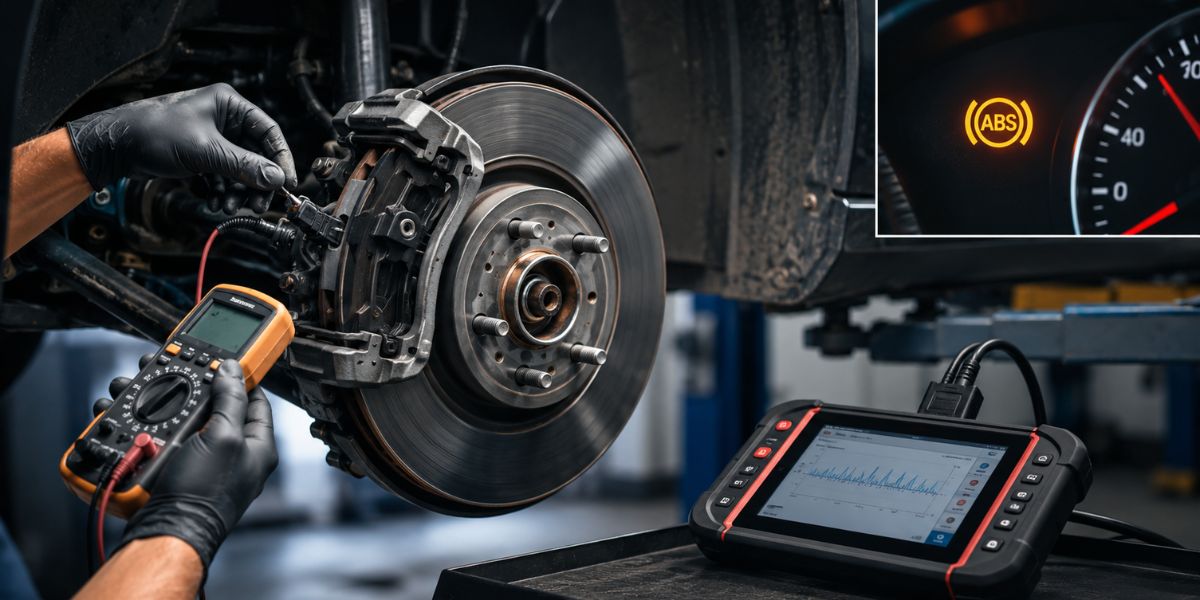
This is exactly why modern cars have ABS — the anti-lock braking system. ABS detects when a wheel is about to lock and pumps the brakes automatically, up to 15 times per second, far faster than any human foot. If you feel the pedal pulsing during a hard stop, that is ABS working correctly. Do not lift your foot — keep pressing firmly and let the system do its job.
Types of Brakes in a Car — Disc, Drum, and More
Not all car brakes are built the same way. Here are the main types you will encounter.
Disc brakes
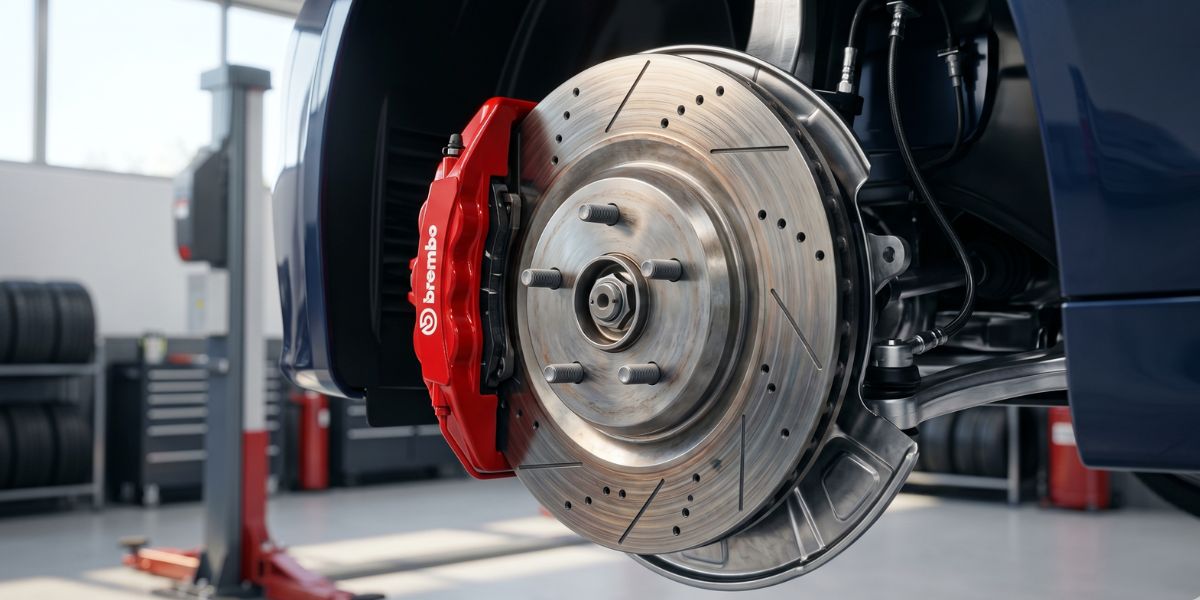
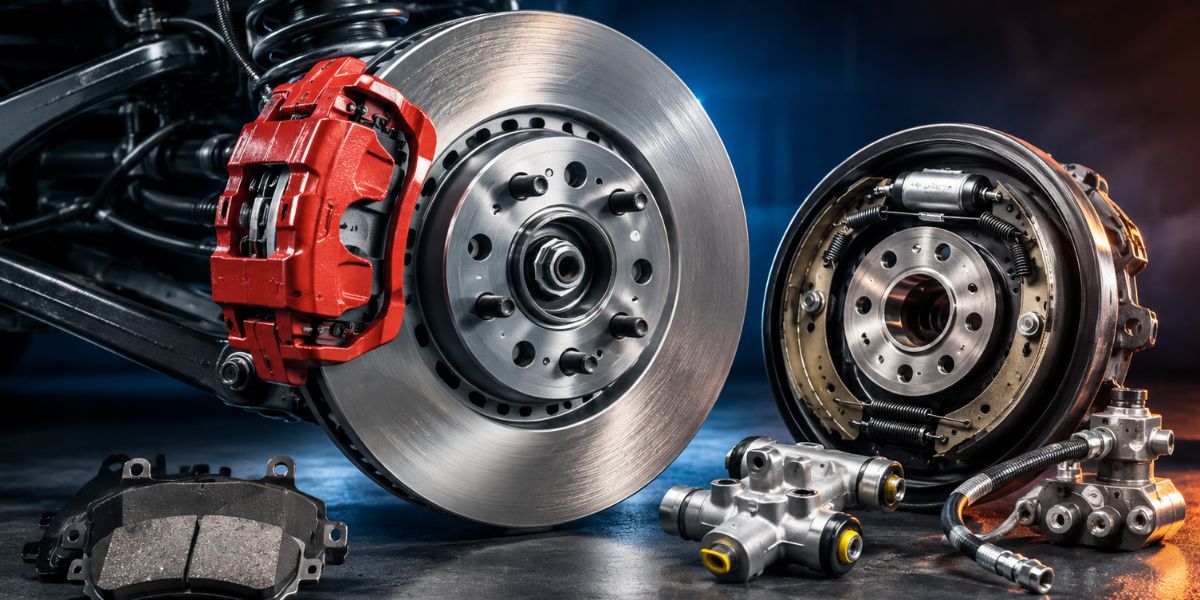
Disc brakes are the most common type on modern cars, especially at the front axle. The key parts are:
- A rotor — a flat, circular metal disc that spins with the wheel
- A caliper — a clamp-like housing that straddles the rotor
- Brake pads — friction material that the caliper squeezes against both sides of the rotor
When you press the brake pedal, hydraulic pressure pushes the caliper’s pistons inward, clamping the pads against the spinning rotor. The friction slows the rotor — and the wheel — to a stop.
Disc brakes handle heat well because the rotor is exposed to the air. Heat dissipates quickly, which is why disc brakes recover fast after repeated hard stops. Most performance cars, SUVs, and trucks use disc brakes on all four wheels. Many economy cars use them on the front and drum brakes on the rear.
Drum brakes
Drum brakes work on a different principle. Instead of a flat disc, there is a hollow drum that rotates with the wheel. Inside the drum, curved brake shoes lined with friction material are pushed outward by a wheel cylinder when you press the brake pedal. The shoes press against the inside of the drum, creating friction.
Drum brakes are cheaper to manufacture and work well for lighter braking loads, which is why they are still found on the rear wheels of many economy cars. They do not dissipate heat as efficiently as disc brakes, and they are more prone to a phenomenon called brake fade — a reduction in stopping power after prolonged hard use. However, for normal everyday rear-wheel braking, they do the job reliably.
Disc vs. drum — a quick comparison
| Feature | Disc brakes | Drum brakes |
| Heat dissipation | Excellent | Moderate |
| Stopping performance | Superior | Adequate for rear wheels |
| Fade resistance | High | Lower under heavy use |
| Maintenance frequency | Every 25,000–70,000 mi | Similar, but less accessible |
| Common location | Front (and often rear) | Rear wheels on economy cars |
| Relative cost | Higher | Lower |
Regenerative brakes (electric and hybrid cars)
If you drive an electric vehicle or a hybrid, your braking system has an extra trick. When you press the brake pedal gently, the electric motor runs in reverse — acting as a generator — to slow the car down. The energy that would otherwise be lost as heat is converted back into electricity and stored in the battery.
Regenerative braking gives you a slightly different pedal feel compared to a conventional car. The initial bite is softer because the motor is doing most of the work. Press harder and the traditional hydraulic brakes kick in alongside it for full stopping power.
Most EV drivers learn quickly to use regenerative braking for the vast majority of their daily slowing down, and reserve the hydraulic brakes for the harder stops. It extends brake pad life significantly — some EV owners report original pads lasting well over 100,000 miles.
The Parking Brake — What It Is and When to Use It
The parking brake goes by several names: handbrake, emergency brake, e-brake. Whatever you call it, it is a separate braking system from the one controlled by the foot pedal.
Why it exists
The hydraulic foot brake is designed for stopping a moving car. But hydraulic systems can lose pressure over time — and if your car is parked on a slope with only the foot brake holding it, there is a risk. The parking brake is a purely mechanical system, usually operating steel cables that clamp the rear brakes directly. It does not depend on fluid pressure, so it holds indefinitely.
Three common types
Traditional lever handbrake. The classic pull-up lever between the front seats, found in most older cars and many current models. Pull up to engage, press the button on the end and push down to release.
Foot-operated parking brake. A separate pedal on the far left, found in many American vehicles, particularly older trucks and SUVs. Press down to engage, press again or pull a release handle to disengage.
Electronic parking brake (EPB). Increasingly standard on modern cars. A small button or rocker switch on the centre console or dashboard replaces the lever entirely. Push to engage, push or pull to release. On many cars, the EPB releases automatically when you move off — you never have to think about it.
When to use the parking brake
Always apply the parking brake when you park, even on flat ground. On a slope, it is essential. If you drive a manual car, always use the parking brake when parked — do not rely on leaving it in gear alone.
Use it also if your foot brake ever fails completely. It will not stop the car as quickly as a working foot brake, but it can slow you enough to reach safety. Apply it gradually — a sudden yank at speed can lock the rear wheels.
One maintenance note worth remembering: parking brakes that are never used can seize. The cables corrode, the mechanism stiffens, and one day you pull the lever and nothing much happens. Using it regularly keeps everything moving freely.
How to Use the Brake Pedal Correctly
Knowing which pedal is the brake is step one. Using it well is what separates a confident driver from a nervous one.
Smooth, progressive braking
The goal of good braking is to slow the car gradually and predictably. Press the pedal gently at first, then increase pressure as needed, then ease off slightly just before you come to a complete stop. That last part — easing off at the end — prevents the abrupt jerk that happens when a car stops with full pressure still applied.
Your passengers will notice the difference. Smooth braking is one of the clearest signs of an experienced driver.
Stopping distance and following distance
Brakes are only half the equation. The other half is how much space you give yourself.
At 60 mph on a dry road, the average car takes roughly 75 metres — about the length of five double-decker buses — to stop completely. That includes reaction time (roughly one second before your foot even moves) and braking distance. On a wet road, double it. On ice, multiply it by ten.
The two-second rule is the simplest guideline: pick a fixed point on the road ahead of the car in front. When they pass it, start counting. You should not reach that same point for at least two seconds. In wet weather, make it four seconds. On motorways at high speed, give yourself even more.
Emergency stops
If you need to stop suddenly, press the brake pedal firmly and hold it down. Do not pump it — in a car with ABS, the system handles that for you. Keep your eyes up and steer around any obstacle if necessary. ABS is specifically designed to let you steer while braking hard.
If your car does not have ABS (older vehicles), threshold braking is the technique: apply the brakes as hard as possible without quite locking the wheels. You can feel the point where the tyre is about to skid — just before that moment, maximum braking force is available.
Common mistakes to avoid
Riding the brake on long downhill stretches is one of the most damaging things you can do. Continuous, light braking generates steady heat in the pads and rotors without ever letting them cool. The pads can overheat and glaze, dramatically reducing stopping power just when you need it most. Instead, shift to a lower gear and use engine braking to control your speed. Touch the brakes briefly and firmly if needed, then release completely to let them cool.
Left-foot braking in an automatic car is another habit worth avoiding unless you have been specifically trained for it. Most drivers keep their left foot resting near the footrest, and reaching for the brake with it tends to produce late, jerky applications. The exception is some forms of motorsport, where left-foot braking is a deliberate technique — but for everyday driving, right foot only.
Signs Your Brakes Need Attention
Your brakes will usually give you plenty of warning before they fail completely. Pay attention to these signals.
Squealing or squeaking. A high-pitched squeal when braking is usually the wear indicator — a small metal tab built into the brake pad that scrapes against the rotor when the pad gets thin. It is designed to be annoying so you cannot ignore it. When you hear it regularly, your pads need replacing soon.
Grinding metal sound. If the squeal has progressed to a harsh grinding noise, the pads have worn through completely and the metal backing plate is now contacting the rotor. This is urgent. Every mile you drive is scoring the rotor surface, turning a straightforward pad replacement into a far more expensive rotor replacement too.
Spongy or soft pedal. A pedal that feels soft or that travels further toward the floor than usual suggests air in the brake lines or low brake fluid. Air compresses; fluid does not. The result is a mushy, uncertain pedal feel. Top up the fluid if it is low, then find out why it dropped — fluid does not disappear without a reason.
Pulling to one side under braking. If the car veers left or right when you press the brake pedal, one side is braking harder than the other. A stuck caliper, uneven pad wear, or a collapsed brake hose on one side are the most common causes.
Vibration through the pedal or steering wheel. A pulsing or shuddering sensation under braking usually means the rotors are warped. This happens when metal that has been heated unevenly cools unevenly, leaving small high and low spots on the rotor surface. You feel each high spot as a pulse through the pedal.
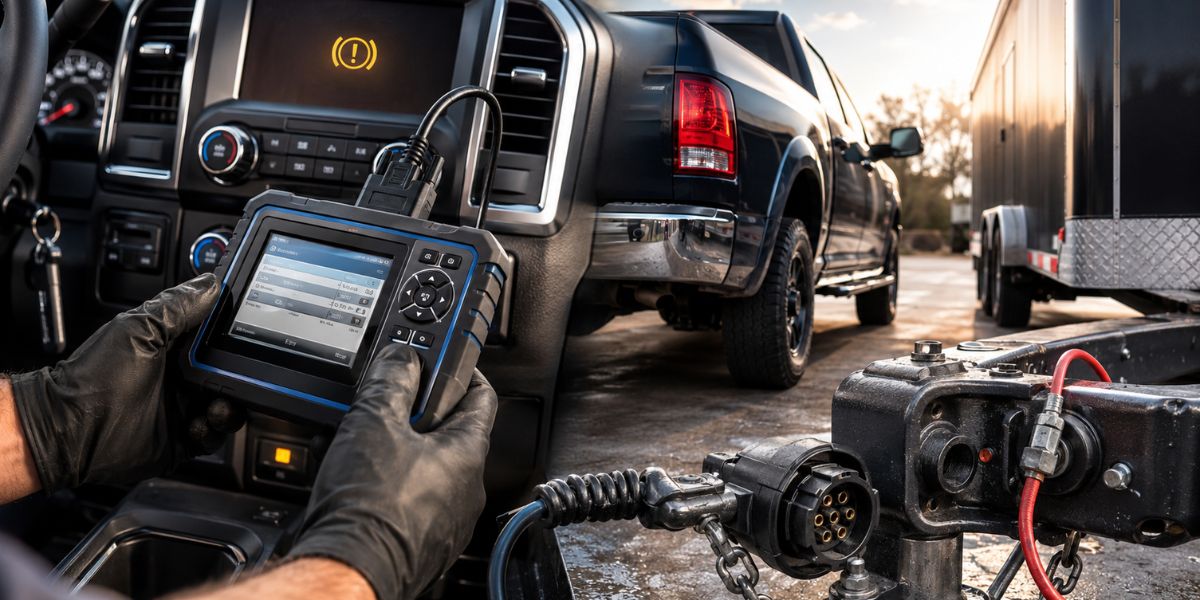
The brake warning light. The red brake light on your dashboard can signal several things: the parking brake is still partially engaged, the brake fluid level is critically low, or there is a fault in the ABS system. Check the handbrake first — a surprisingly common cause. If the light stays on after releasing it, check your fluid level before driving further.
If your brake pedal sinks noticeably closer to the floor than usual, or if it goes all the way to the floor, do not drive the car. This indicates a serious hydraulic failure. Call for roadside assistance.
How Often Do Car Brakes Need to Be Replaced?
There is no single answer — it depends on your driving style, vehicle weight, the type of pads fitted, and the roads you drive on. But these ranges give you a useful starting point.
Brake pads typically last between 25,000 and 70,000 miles. City driving wears pads faster because you brake more frequently. Motorway driving is much kinder to pads because you rarely need to slow suddenly. Performance-oriented semi-metallic or ceramic pads generally last longer than the softer organic pads fitted to many economy cars from the factory.
Rotors usually survive two or three sets of pads before they need replacement — roughly 50,000 to 80,000 miles. They can fail earlier if pads are allowed to wear through completely (metal on metal accelerates rotor wear dramatically) or if frequent hard braking causes warping.
Brake fluid should be replaced every two years or 24,000 miles, regardless of how the brakes feel. It is cheap insurance against the moisture absorption that causes pedal problems.
| Component | Average lifespan | DIY difficulty | Average cost (shop) |
| Brake pads (front) | 25,000–70,000 miles | Moderate | £80–£180 per axle |
| Brake pads (rear) | 30,000–80,000 miles | Moderate | £70–£160 per axle |
| Rotors (front) | 50,000–80,000 miles | Moderate | £150–£300 per axle |
| Brake fluid flush | Every 2 years | Easy | £50–£100 |
| Caliper replacement | As needed | Hard | £150–£400 each |
Always replace brakes in pairs across the same axle. If the front-left pad is worn, the front-right is worn too — or very close to it. Replacing one side and not the other creates uneven braking force and will pull the car to one side.
Brake Safety Tips Every Driver Should Know
Good braking technique and a well-maintained system go together. Here are the habits worth building from day one.
In a car with ABS, press and hold. The instinct to pump the brakes is left over from the pre-ABS era. In a modern car, pumping the pedal actually interrupts what ABS is doing. Press firmly, hold it down, and let the system work. Keep steering — that is the whole point of ABS.
Check your fluid regularly. Add a quick look at the brake fluid reservoir to your monthly checks. It sits in the engine bay, usually near the bulkhead, in a small translucent plastic container with MIN and MAX markings. If it is close to MIN, top it up and find out why it dropped.
Bed in new brake pads properly. New pads need a short break-in period to transfer a thin, even layer of friction material onto the rotor. This is called bedding. A simple bedding procedure: from about 30 mph, apply moderate brake pressure to slow to about 5 mph — do not stop completely. Repeat eight to ten times, letting the brakes cool between each application. Your stopping performance will improve noticeably after this.
Increase your following distance in wet weather. Wet roads can double or triple stopping distances. Rain reduces the friction between tyre and road long before it becomes heavy enough to notice. If it has just started raining after a dry spell, the road is often more slippery than during heavy rain — light rain lifts the oil deposits that build up on dry surfaces. Give yourself extra space.
Listen to your car. Brakes communicate through sound and feel. A squeal, a grind, a pull, a shudder — each one is telling you something specific. Learn what your brakes feel and sound like when they are healthy, so you notice immediately when something changes.
FAQ
Which pedal is the brake in a car?
In an automatic car, the brake is the left of the two pedals. In a manual car, the brake is the middle pedal out of three — between the clutch on the left and the accelerator on the right. The brake pedal is always wider than the accelerator and sits slightly higher off the floor.
What are the three pedals in a manual car?
From left to right: the clutch, the brake, and the accelerator. The clutch disconnects the engine from the gearbox so you can change gear. The brake slows and stops the car. The accelerator increases engine speed. Only manual transmission cars have all three pedals — automatic cars have just two.
What is the difference between disc brakes and drum brakes?
Disc brakes use a caliper that squeezes flat pads against a round metal rotor. They dissipate heat quickly and give strong, consistent stopping power — standard on most modern cars. Drum brakes use curved shoes that press outward against the inside of a hollow drum. They are cheaper to produce and still found on the rear wheels of many economy cars, but they handle heat less effectively than disc brakes.
Is the handbrake the same as the foot brake?
No. The foot brake is a hydraulic system that slows a moving car. The handbrake — also called the parking brake — is a separate mechanical system that holds a stationary car in place. They operate independently. Some modern cars have an electronic parking brake (a button) instead of a traditional lever.
Why does my brake pedal feel spongy?
A spongy pedal is most often caused by air in the brake lines or low brake fluid. Air compresses under pressure, while fluid does not — so trapped air makes the pedal feel soft and inconsistent. The fix is bleeding the brake lines to remove the air and topping up the fluid. Have it inspected before driving further.
How long do car brakes last?
Brake pads typically last between 25,000 and 70,000 miles. Rotors usually last two to three sets of pads — roughly 50,000 to 80,000 miles. Brake fluid should be replaced every two years regardless of mileage, because it absorbs moisture over time which lowers its boiling point.
Can I drive with the brake warning light on?
It depends on why it is on. First check that the parking brake is fully released. If the light stays on, check the brake fluid level. If the fluid is very low, do not drive — top it up and find the source of the loss before moving. If the fluid level is fine and the light is still on, have the car inspected. A brake warning light that cannot be explained by the parking brake or fluid level should never be ignored.
Conclusion
The brake pedal is the middle pedal in a manual car and the left pedal in an automatic. That is the simple answer to which is the brake in a car.
But as you have seen, there is a lot more to braking than knowing which pedal to press. Understanding how hydraulic pressure works, why disc brakes handle heat better than drum brakes, how ABS protects you in a panic stop, and what a grinding noise is trying to tell you — all of that knowledge makes you a safer, more confident driver.
Your brakes are the most important safety system on your car. They work hard and quietly every single day. Pay attention to how they feel and sound, keep the fluid fresh, and replace the pads before the wear indicator turns into a grinding sound. Do that, and your braking system will repay you with years of reliable, reassuring performance.